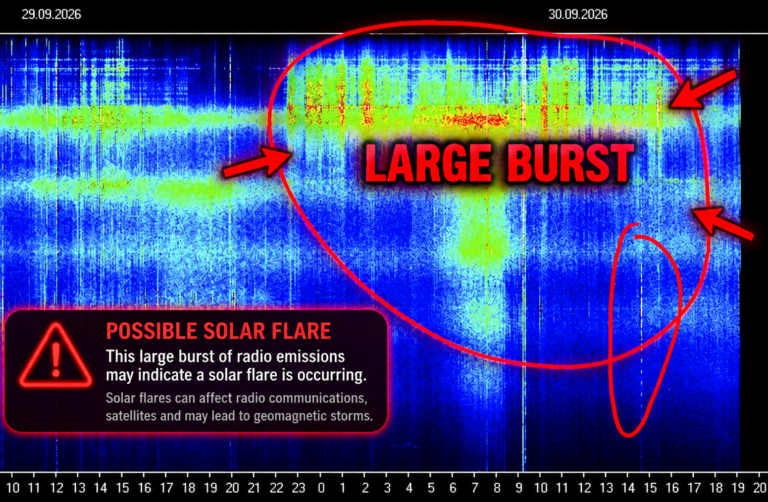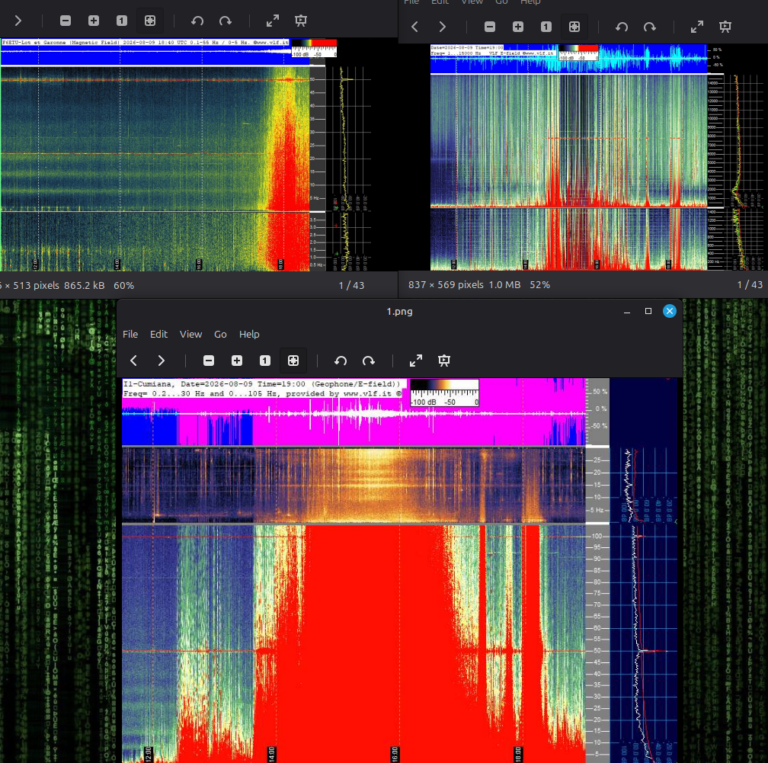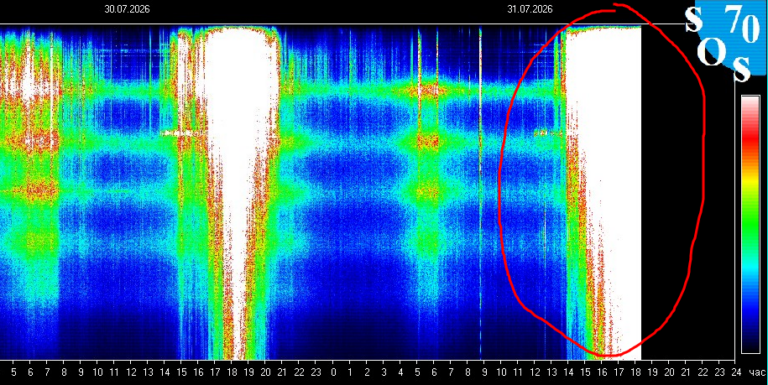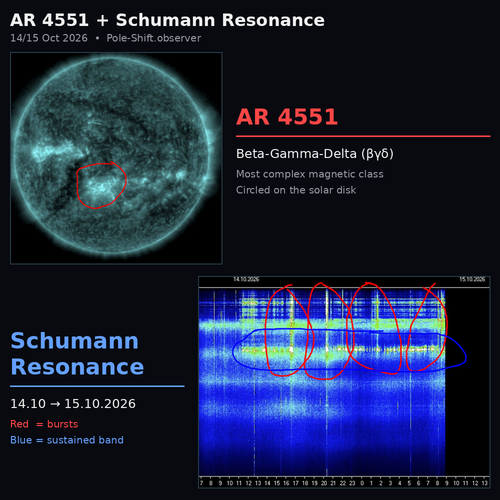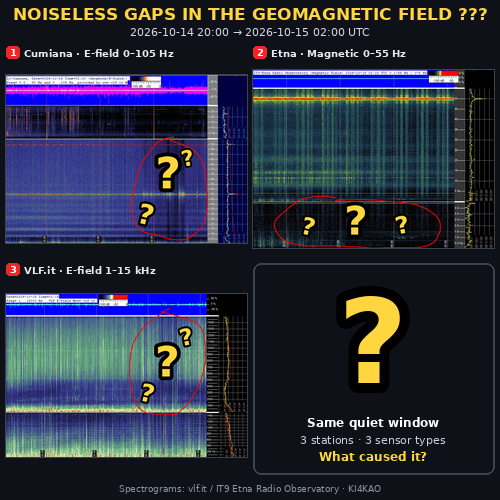
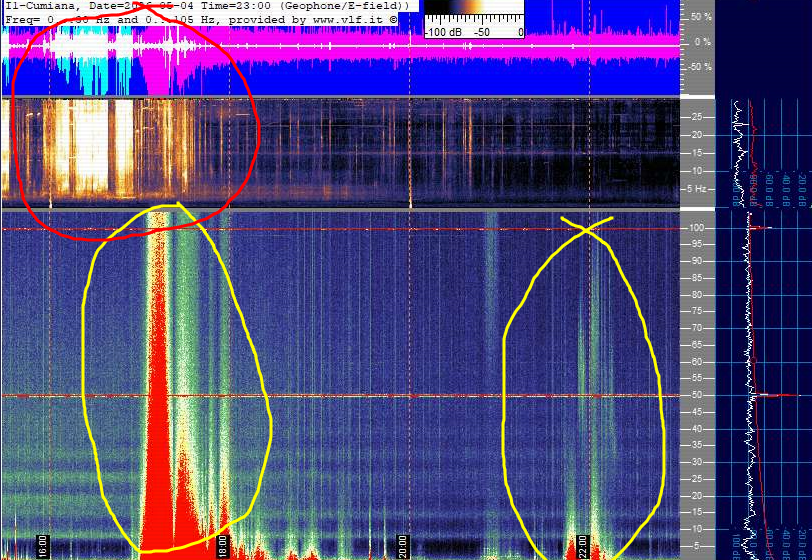
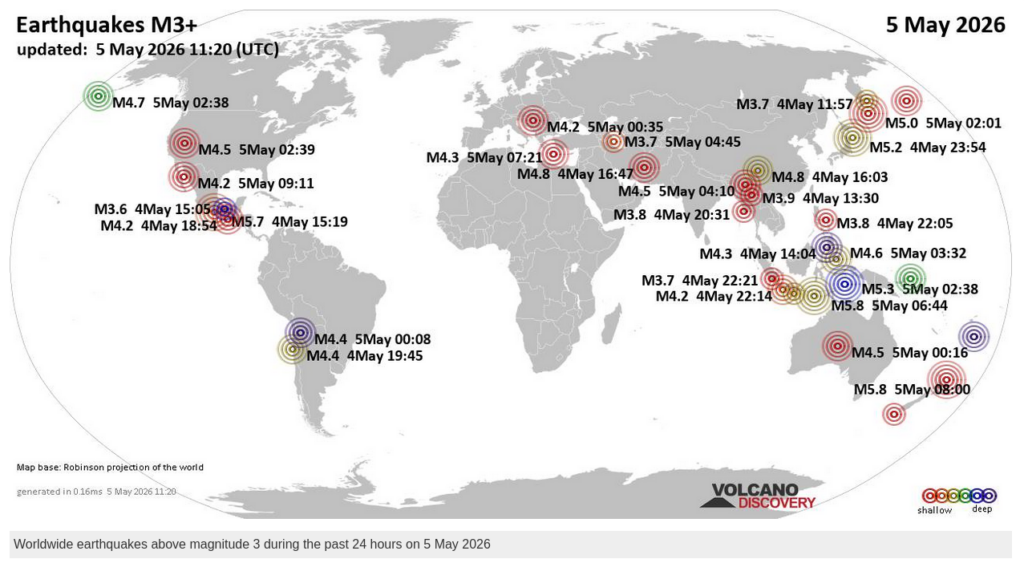
Last night just before the surprise geomagnetic storm struck Earth, The Schumann Resonance in Cumiana showed a power spike followed by a smaller and shorter strike. This is a great indicator of a big quake on the horizon after a weeks worth of buildup.
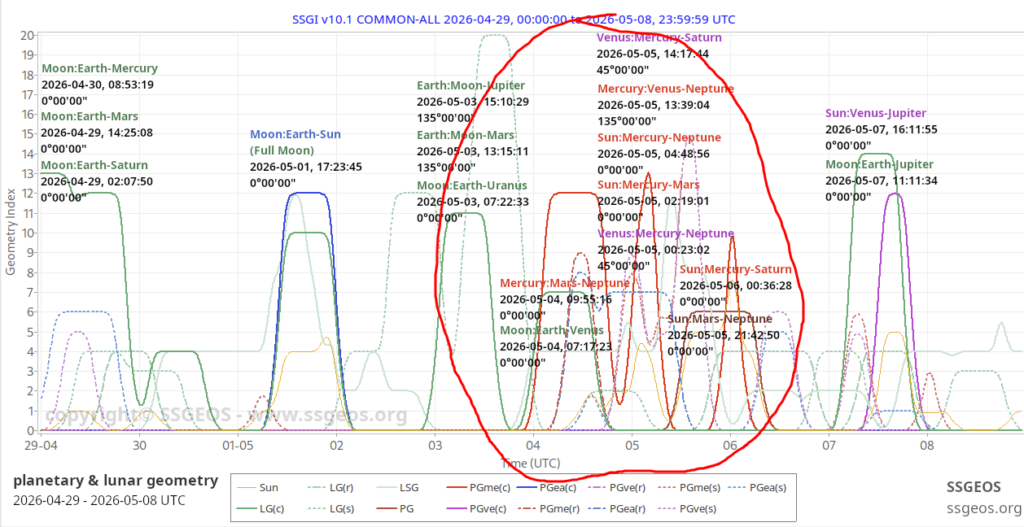
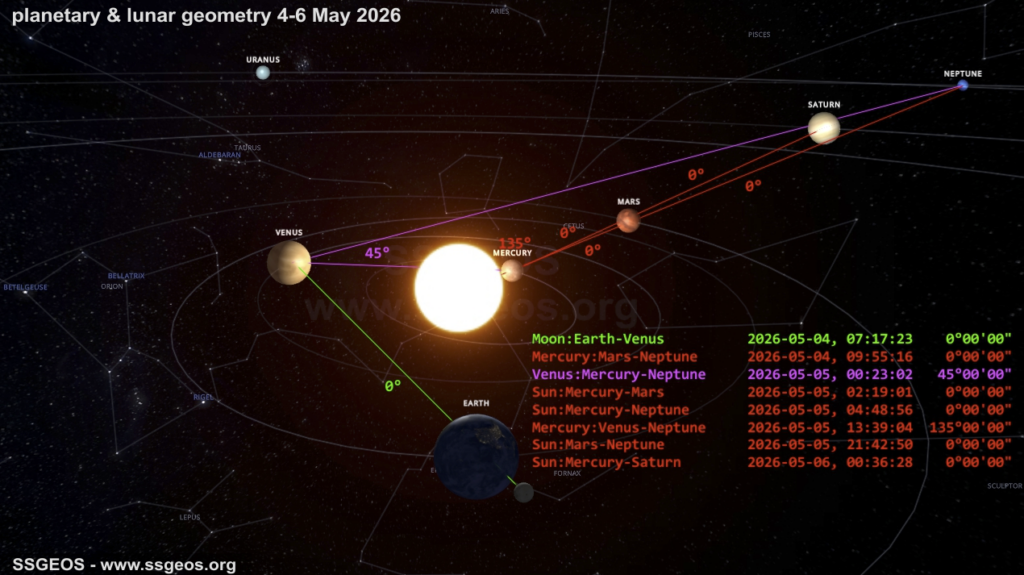
This coincides with geometry data that we will see strong geomagnetic conditions and gravity anomalies that will affect the internal engine of Earth, and other planets. We will see M6 and possibly M7 quakes in the next 48 hours along with the rising increase of M5 quakes which we have been seeing in the last few days.
To make conditions worst, we are under a geomagnetic disturbance AND geomagnetic storm. To add to the mix, we have cosmic radiation also interacting and with the soon coming coronal hole winds from the sun, Earths magnetic field is taking a hit.
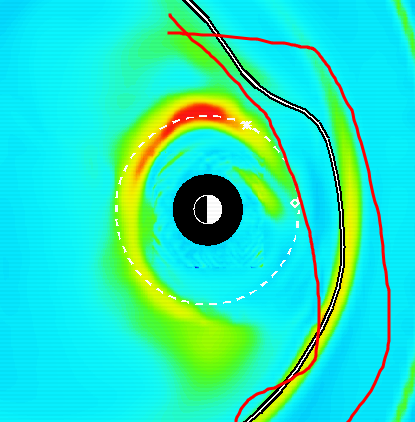
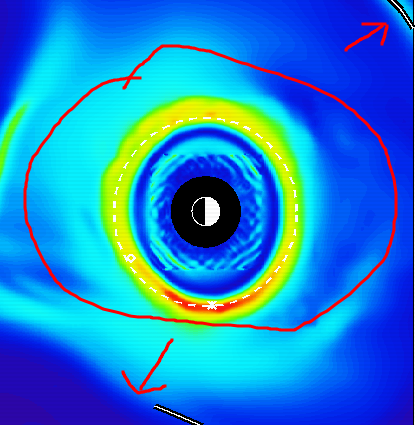
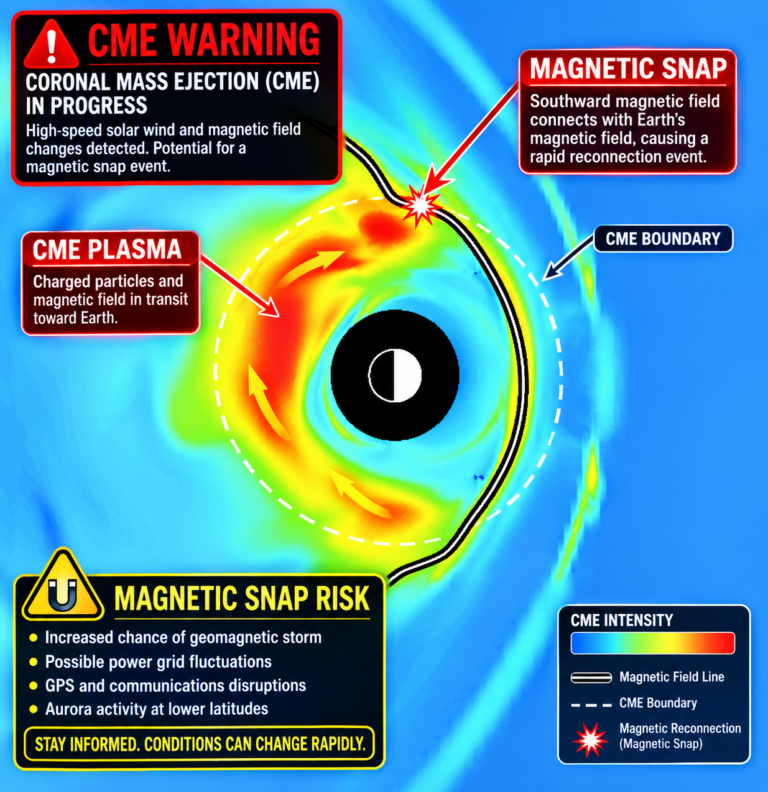
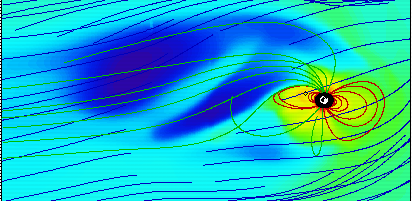
Image on the left was taken last night and the image on the right is as of this posting. We can see the magnetic field snapping, expanding and transforming with the coming energies of the geomagnetic storm.
These instant transformations is manifesting on the Schumann will can produce anomalies around the planet.
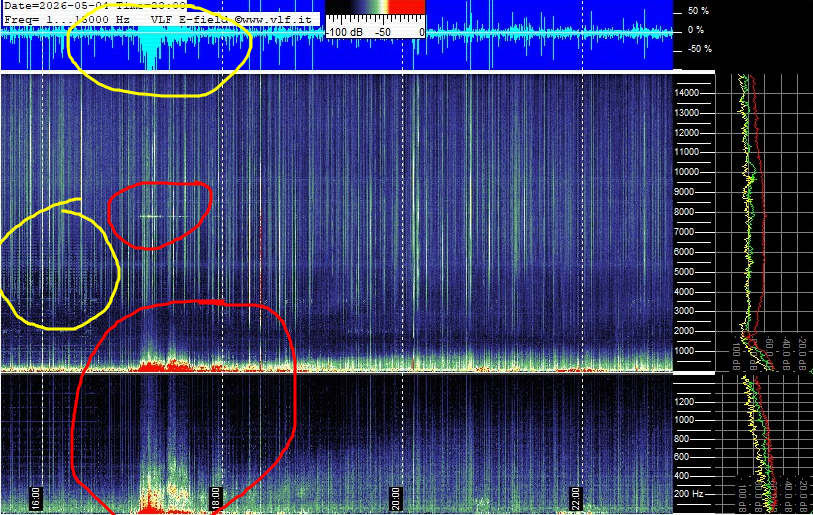
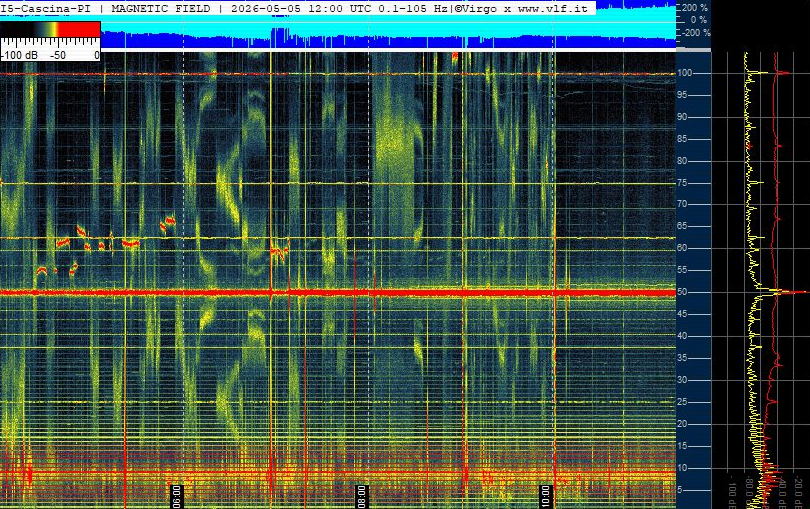
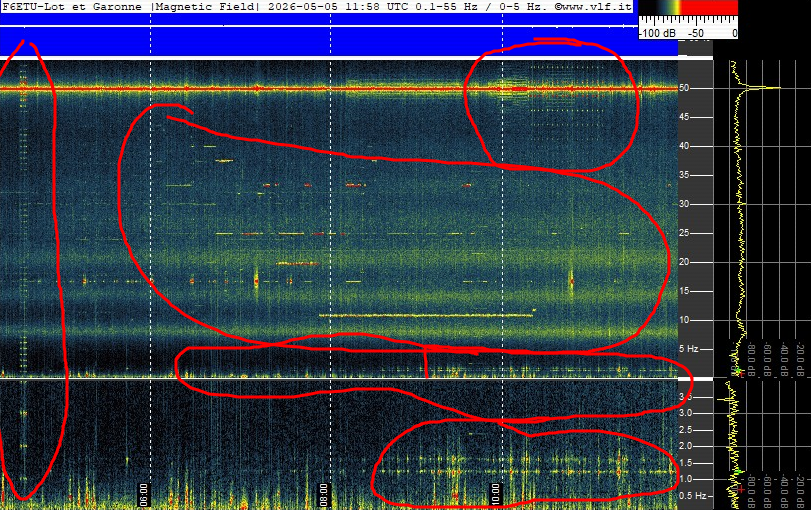
We have already had reports of strange phenomenon happening and this will only increase as Earths magnetic field continues to weaken.
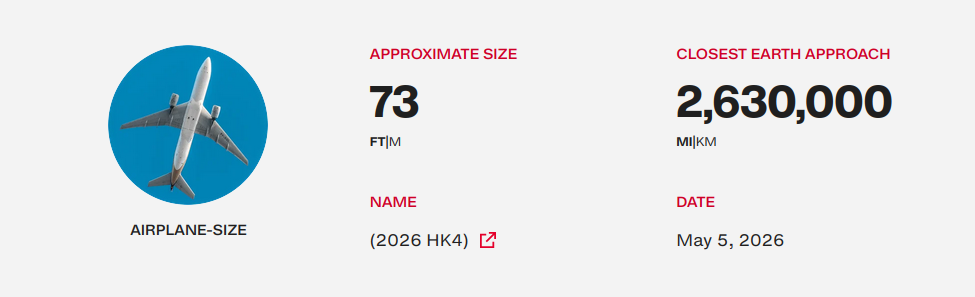
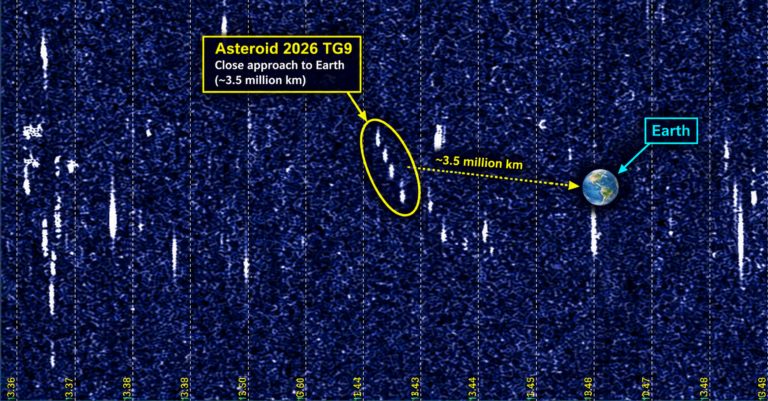
We have one asteroid on watch today however, there is heavy traffic in space. They can be satellite debris however, not all of these are from satellites. Possible fireball sightings today and tomorrow.
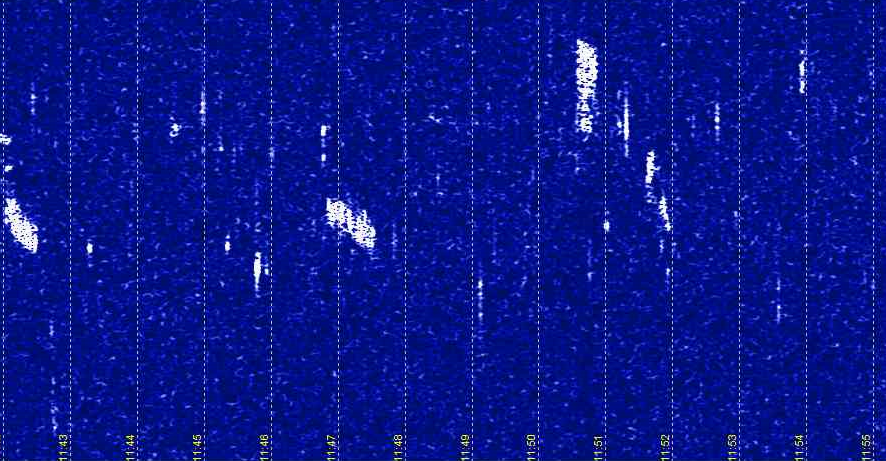
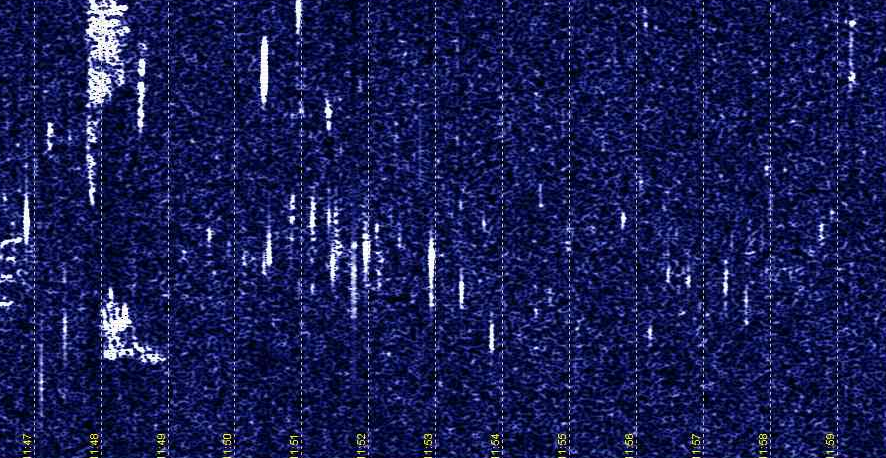
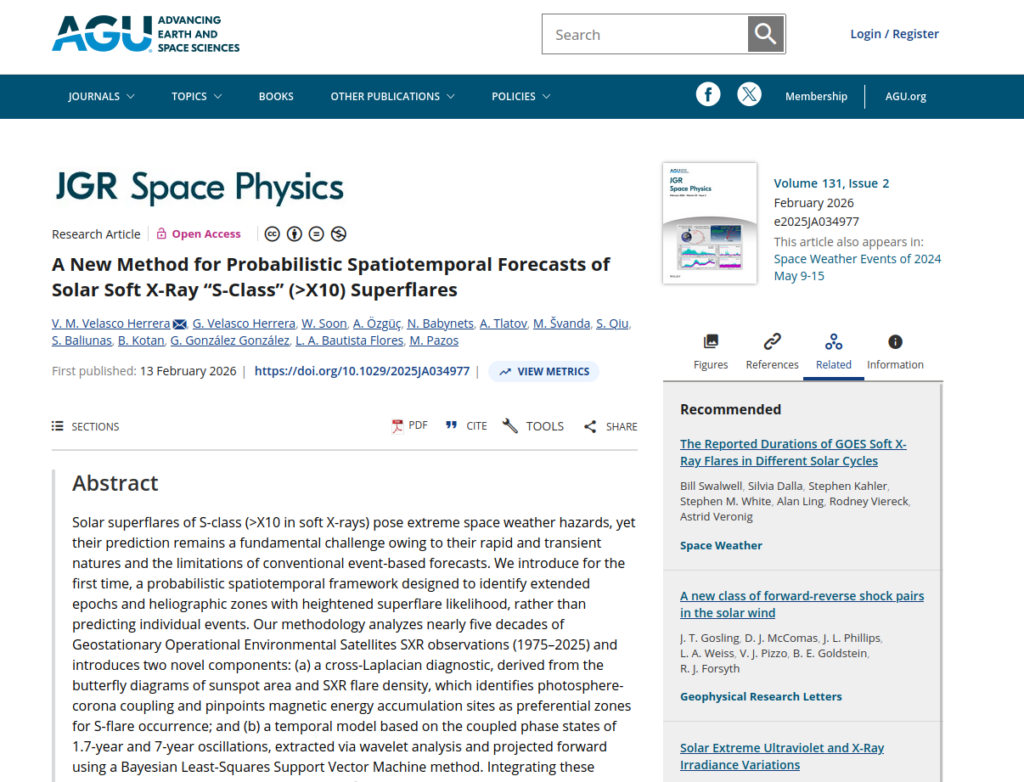
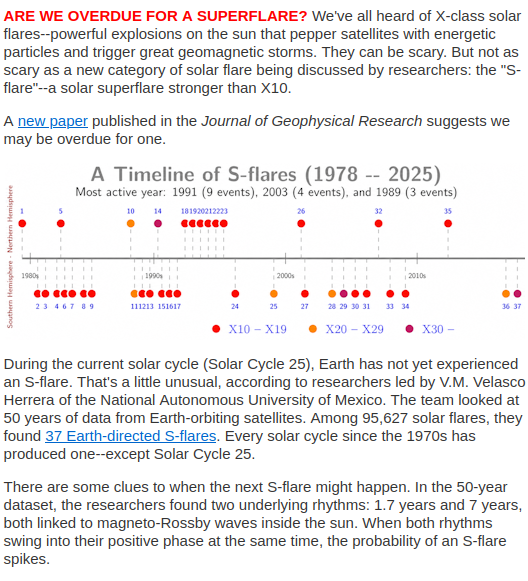
New research studies just released about the Sun’s S-Class super flares and they confirmed, We had not had a superflare in a very long time and the Sun is way overdue for this superflare. https://www.spaceweather.com/ mentioned the next chance for a superflare will start next year in 2027. If this superflare is Earth-directed, it will not be good.
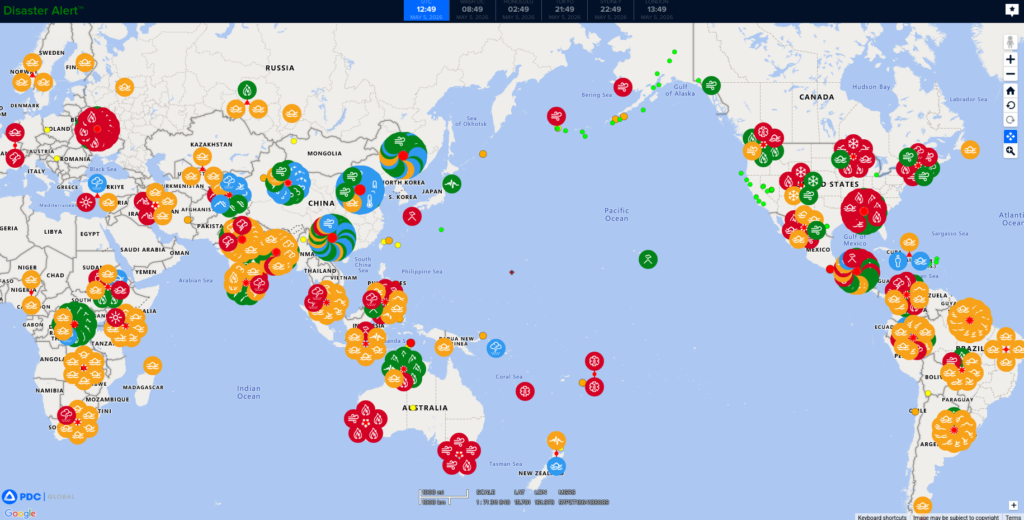
There is 445 Currently active disasters on the planet:
:Product: Forecast Discussion
:Issued: 2026 May 05 1230 UTC
# Prepared by the U.S. Dept. of Commerce, NOAA, Space Weather Prediction Center
#
Solar Activity

.24 hr Summary...
Solar activity reached low levels, with only C-class activity observed.
There are currently eight numbered regions on the visible disk. Region
4425 (N05W68, Hsx/alpha) became a unipolar group following the decay of
its trailing spots. Region 4428 (S23W72, Eao/beta) grew in area and
length with new flux emergence and consolidation of its leading and
trailing spot groups. Region 4429 (S05W27, Cai/beta) lost penumbra in
its trailing spots while consolidation was observed in the leading
spots. Region 4431 (S16E05, Eso/beta) declined in area with flux
submergence in the intermediary and trailing portions. Region 4432
(N13E20, Csi/beta) grew as intermediary spots emerged. Region 4433
(S16E50, Dso/beta) showed minor cancellation in the middle and trailing
areas. Regions 4434 (N12E43, Axx/alpha) and 4435 (N23E57, Hsx/alpha)
remained stable unipolar spots.

A slow-moving eruption, potentially associated with a C1.5 flare from
Region 4425, was observed in LASCO C2 imagery at approximately 04/1200
UTC. Additionally, a filament eruption from near S26W73 was first
observed in C2 imagery at 04/1424 UTC. Analysis of these events
indicated that the ejecta should pass ahead of Earth. No other
Earth-directed CMEs were observed.

.Forecast...
Solar activity is expected to be at low levels through 07 May, with a
chance for isolated M-class flares (R1-R2/Minor-Moderate) primarily due
to the flare potential of Region 4429.


Energetic Particle

.24 hr Summary...
The greater than 2 MeV electron flux at geosynchronous orbit was at
normal to moderate levels with a peak flux of 724 pfu observed at
04/1420 UTC. The greater than 10 MeV proton flux at geosynchronous orbit
remained at background levels.

.Forecast...
The greater than 2 MeV electron flux is expected to remain at normal to
moderate levels through 07 May. The greater than 10 MeV proton flux is
expected to remain at background levels, though there is a less than
slight chance for an S1 (Minor) or greater radiation storm due to the
potential for activity from Region 4424 as it moves just beyond the
western limb.

Solar Wind

.24 hr Summary...
Solar wind parameters initially reflected the residual influence of a
negative polarity coronal hole high-speed stream (-CH HSS). Solar wind
speeds averaged around 400 km/s, while total magnetic field (Bt) held
near 4 nT. Bt began a gradual rise to 7 nT by mid-period. A density
enhancement began at approximately 04/1030 UTC, accompanied by two sharp
rotations in the North-South (Bz) component. Sustained southward
conditions accompanied the passage of an apparent transient, beginning
at approximately 04/1450 UTC, with Bt increasing to a peak of 11 nT and
the Bz component reaching a maximum southward deflection of -10 nT.
Solar wind speeds at the close of the period remained slightly elevated
between 400-450 km/s. The phi angle was predominantly in the negative
(towards the Sun) sector throughout the majority of the period.


.Forecast...
The solar wind environment is expected to remain perturbed through
midday on 05 May due to transient CME influences, and then be weakly
enhanced through 06 May as negative polarity CH HSS influences continue
to wane. Brief enhancements are possible due to additional glancing
influences from another slow-moving CME that departed the Sun on 30
April. A solar sector boundary crossing is expected on 07 May preceding
the onset of a positive polarity CH HSS.

Geospace

.24 hr Summary...
The geomagnetic field was initially quiet but reached G2 (Moderate)
storming levels late in the period in response to apparent transient
influences.


.Forecast...
The geomagnetic field is expected to reach active levels on 05 May with
isolated G1-G2 (Minor-Moderate) storming periods possible early as CME
effects persist. Conditions are expected to subside to quiet to
unsettled levels by 06 May as CME/-CH HSS influences wane, though
isolated active periods remain possible due to potential glancing CME
influences. Active conditions are anticipated on 07 May following the
onset of the +CH HSS.
About The Author