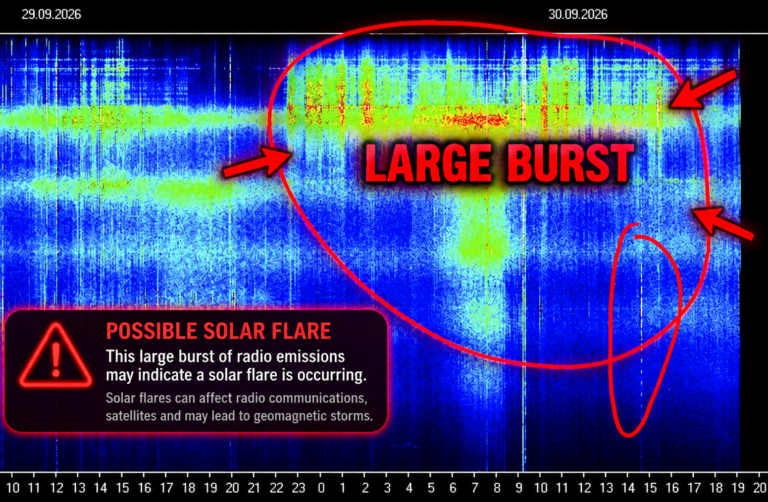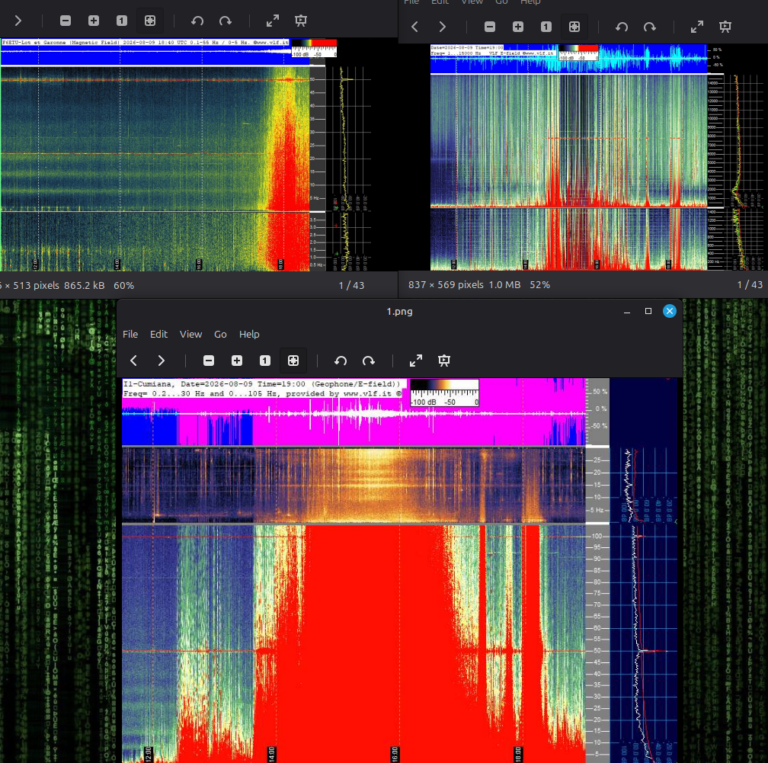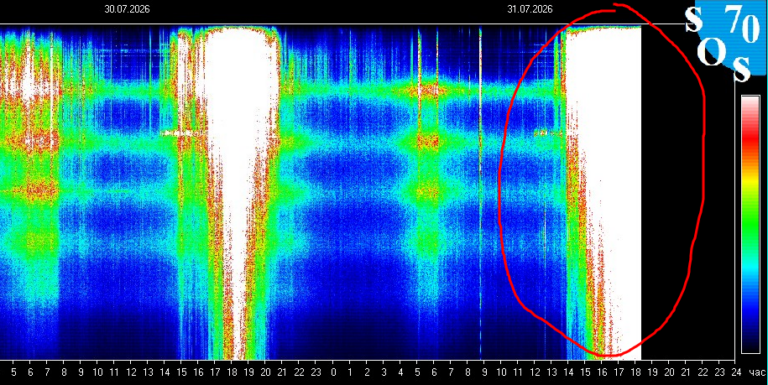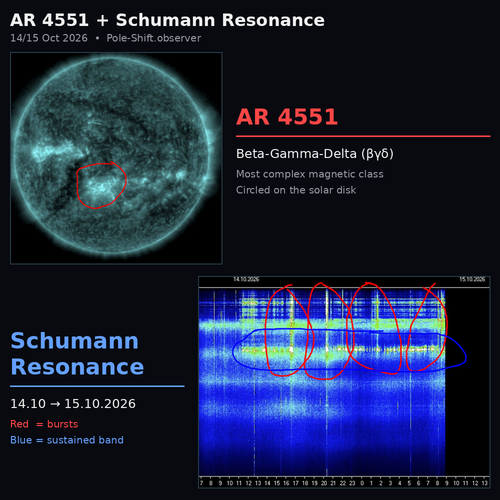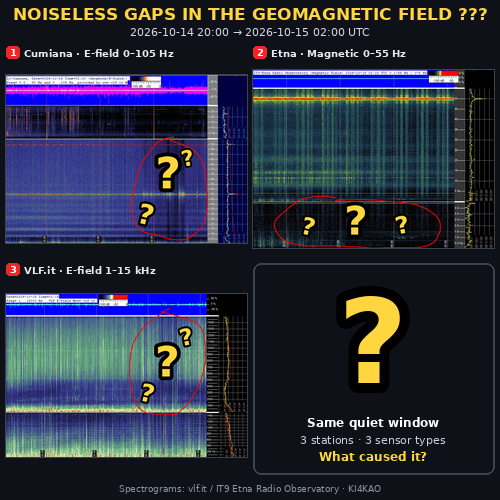
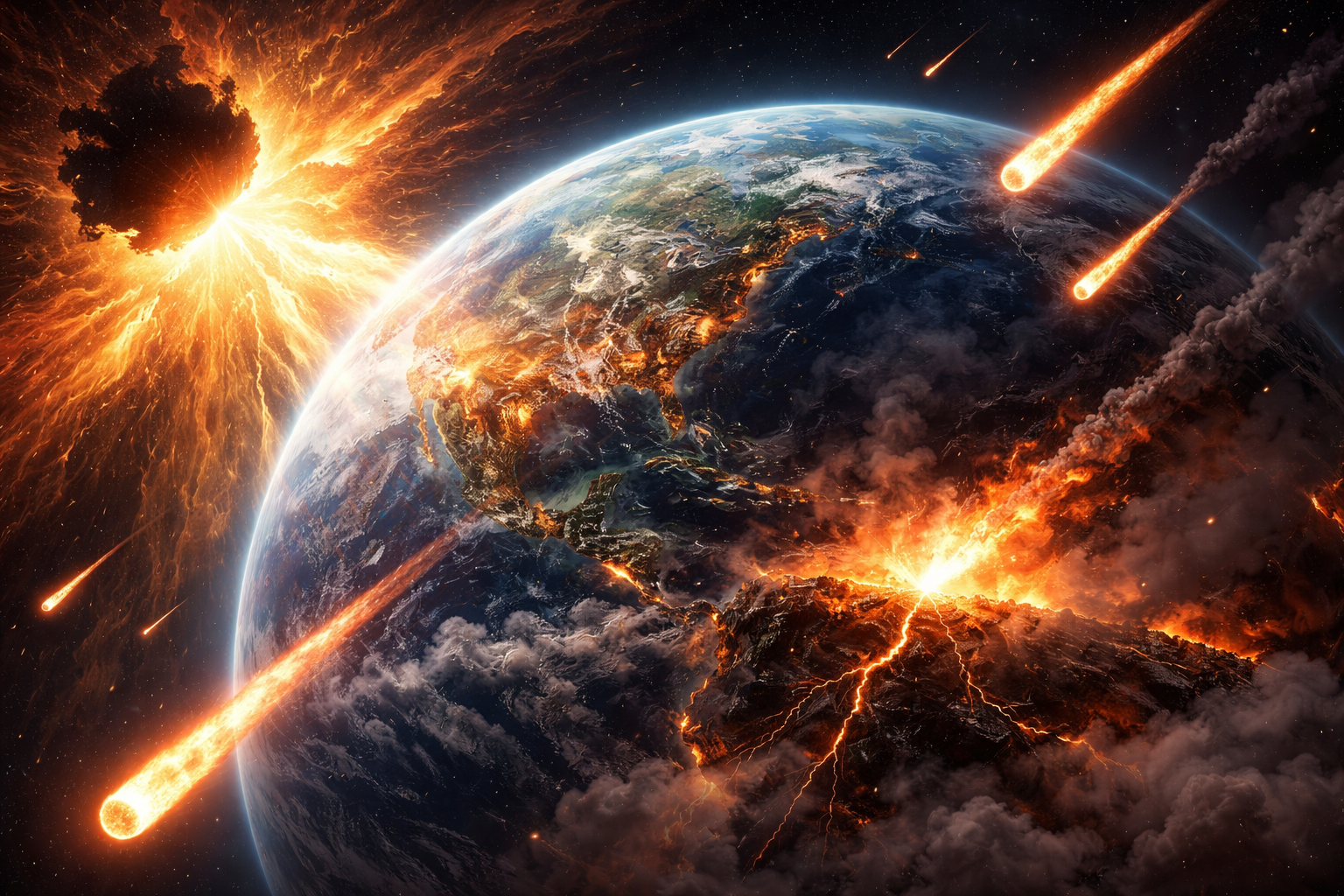
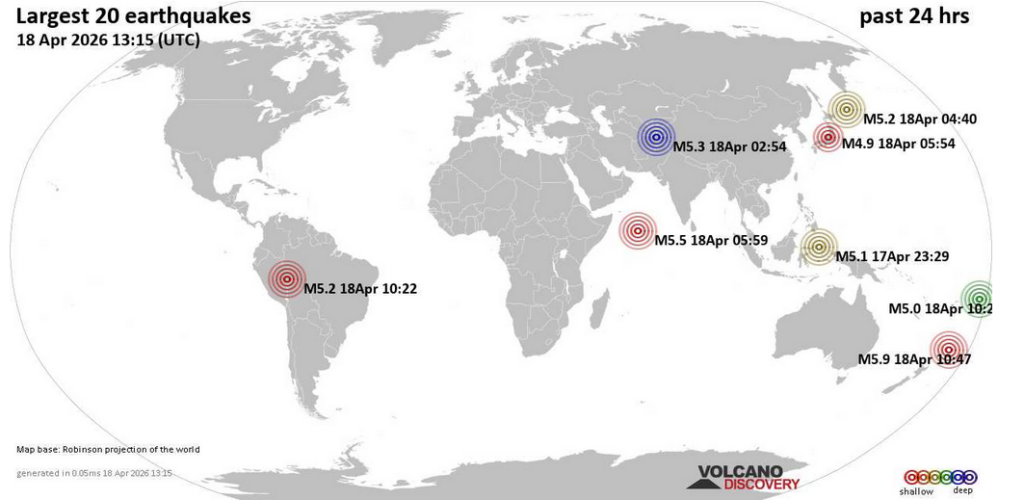
There is lots of activity on Earth and in space today. Growing threats of fireballs and Earthquakes mixed with geomagnetic disturbances which are driving Strong Earth weather across the planet.
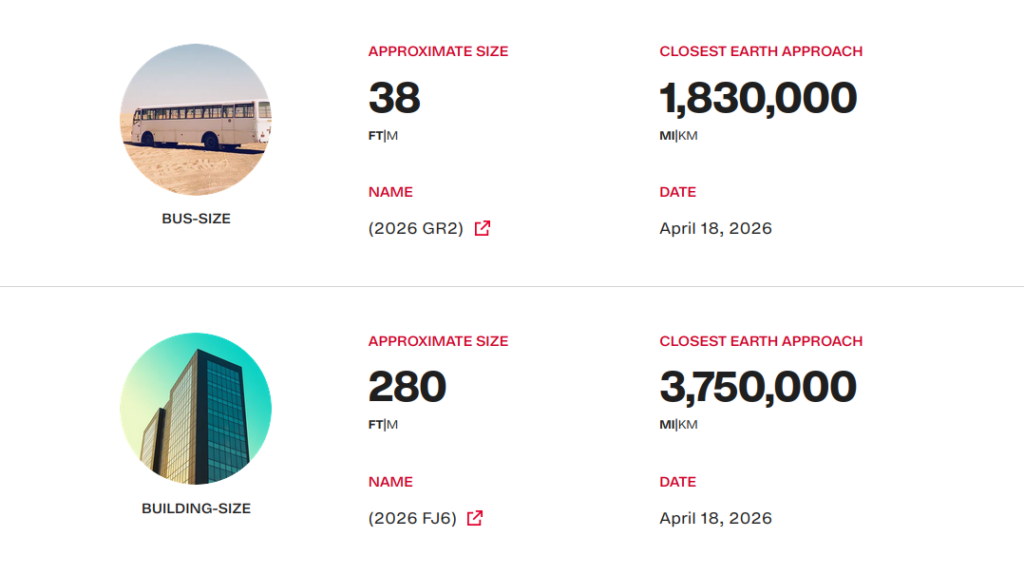
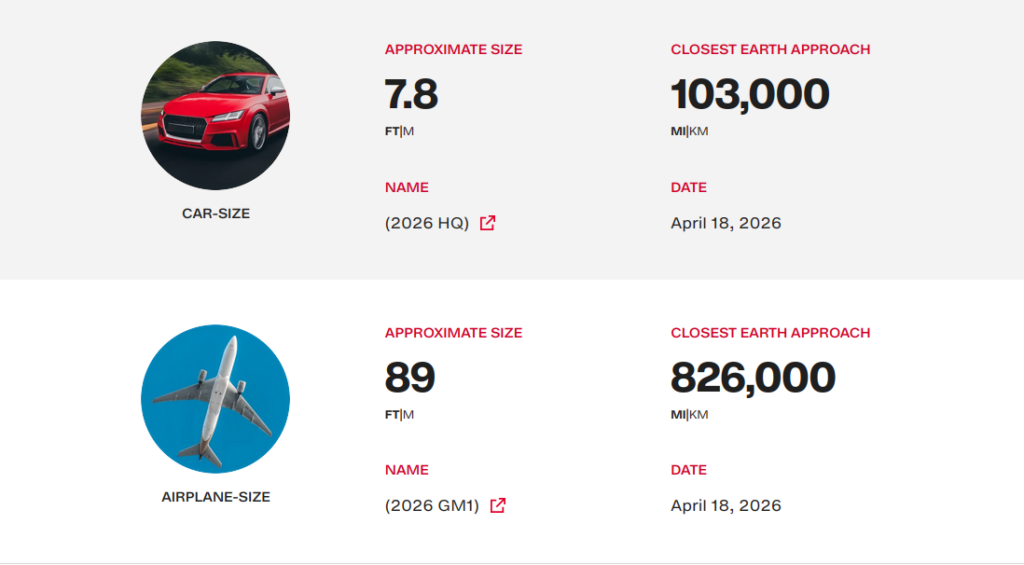
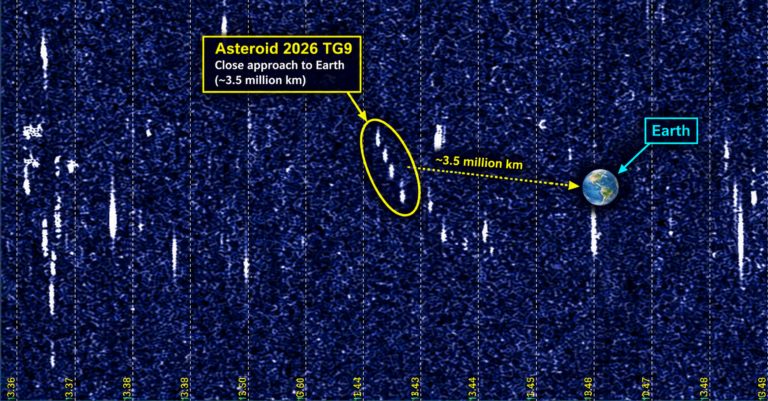
We have four asteroid’s in watch today with 2026 GQ being the closest approach but small enough to pose no threat. That being said, chances for smaller fragments is possible and currently the sky is lit up with these fragments including an energy line indicating energy from the sun is far from over.
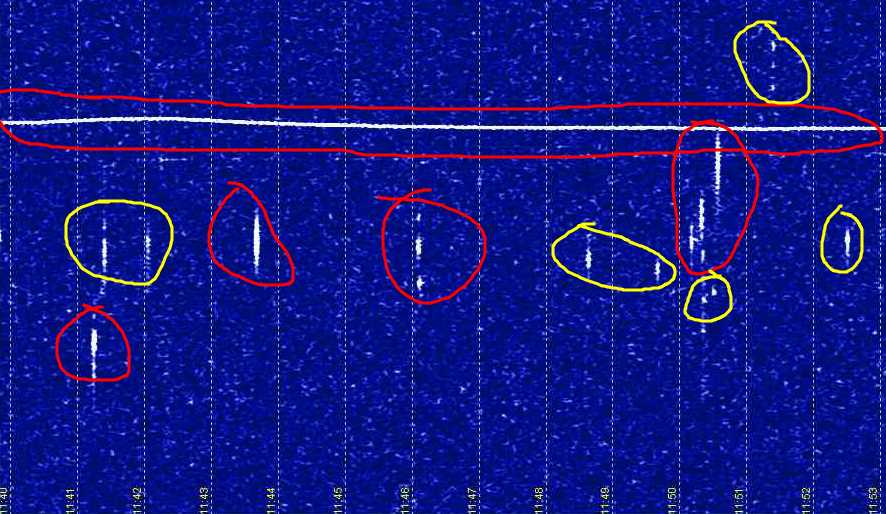
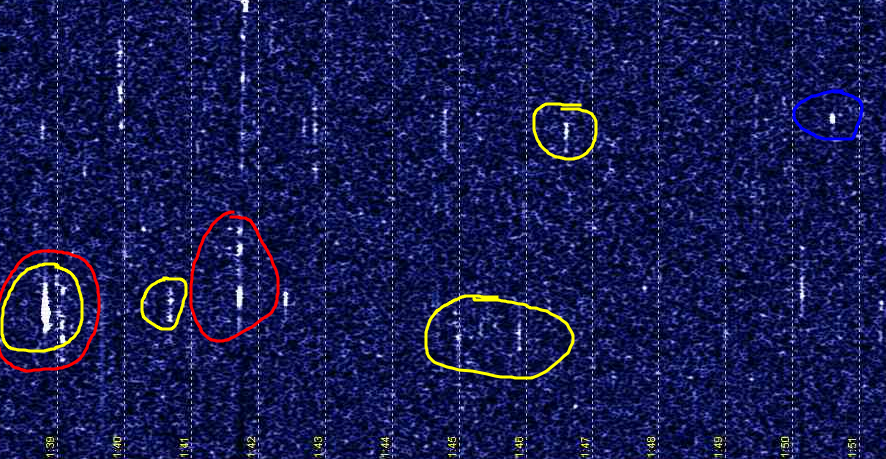
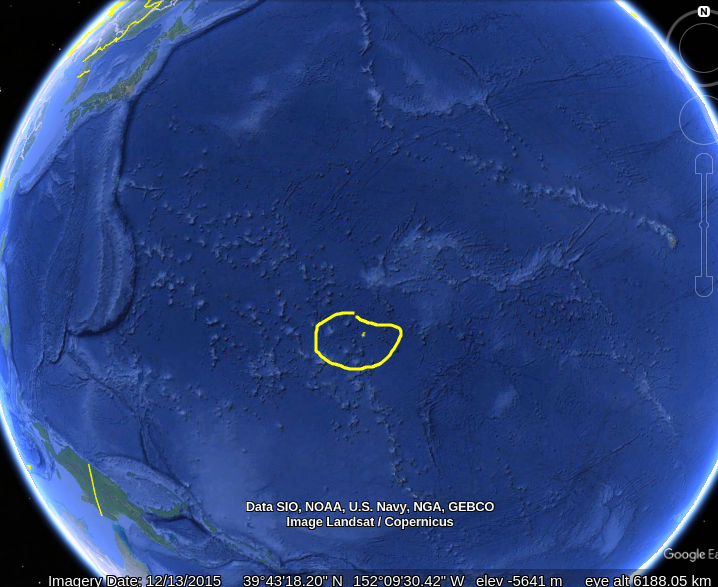
Recently, I have setup my own fireball detection which went live this morning. I got an alert on one of them which impacted in the middle of the Pacific Ocean.

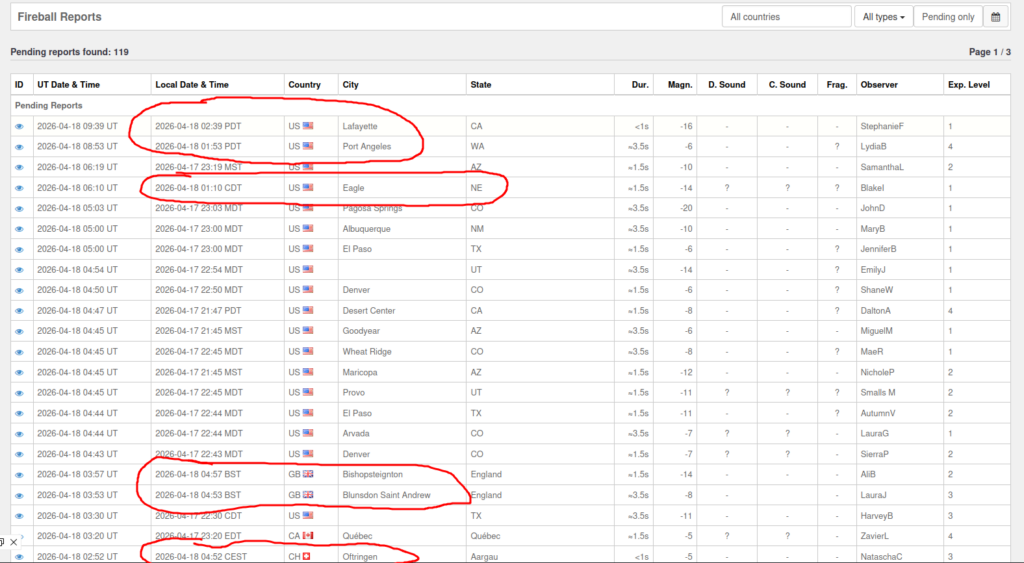
Under pending reports, there has been a few sightings in United States, Canada and the UK. More than likely, there has been two or three fireballs! It is more than likely one or two of them was spotted and captured on camera.
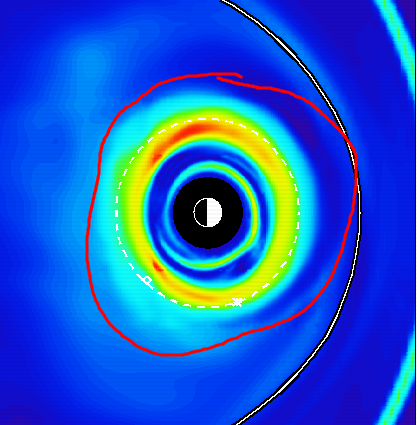
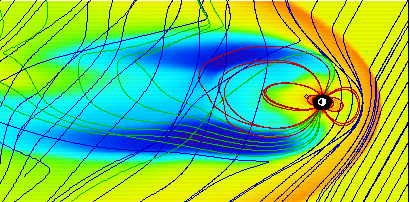
As of this posting, High density radiation is surrounding Earth. Between the satellites and Earth, the radiation from the Sun’s coronal hole has made it inside the magnetic field. Expect migraines and slight dizziness.
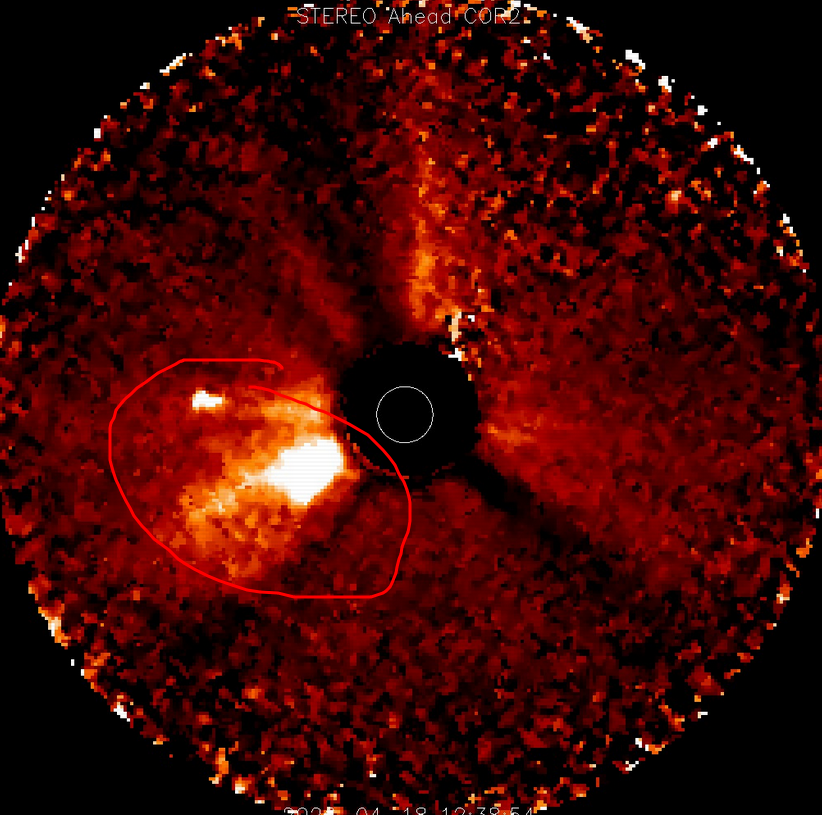
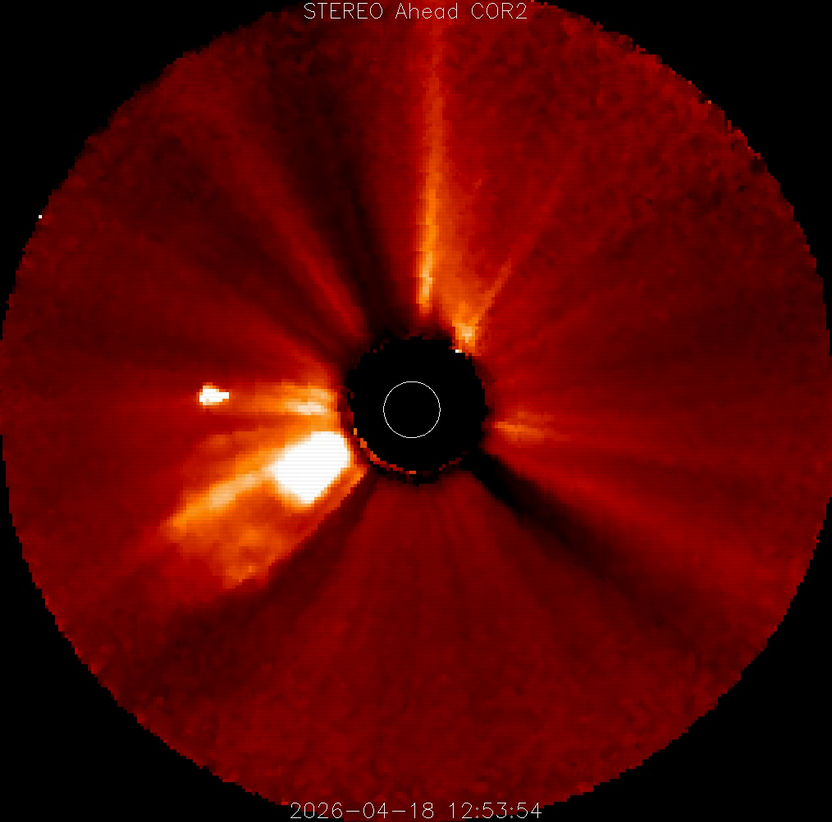
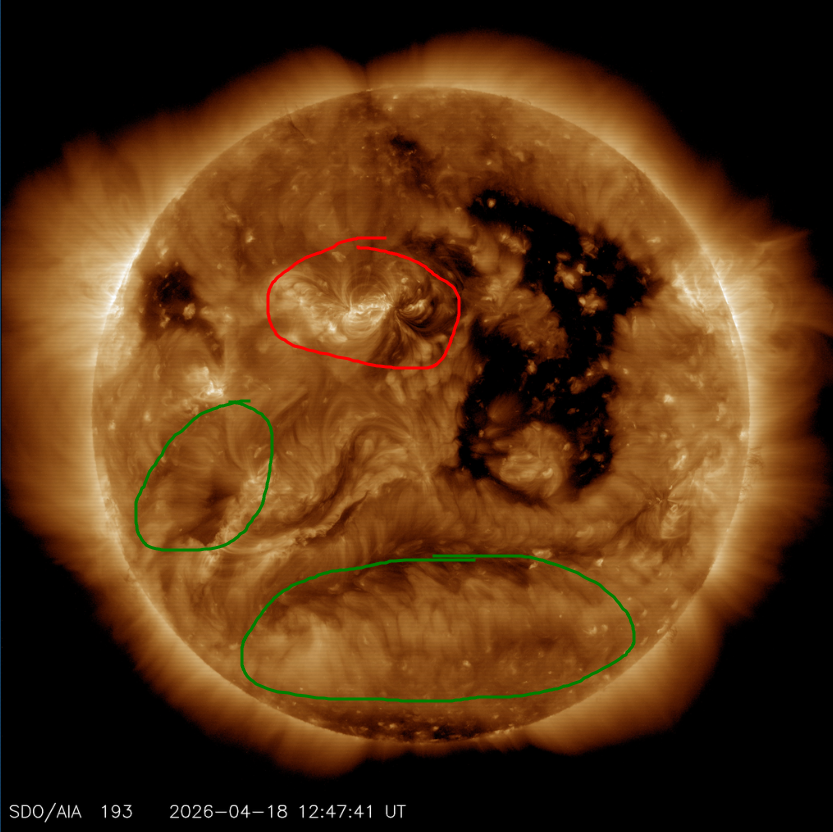
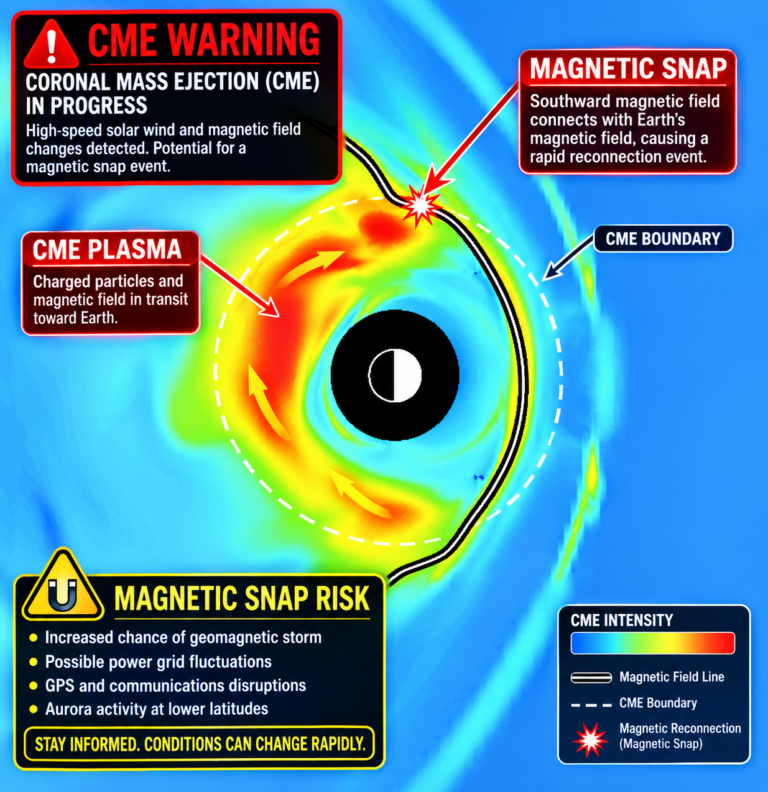
The far-side of the Sun is still highly active with regions starting to appear next week. The Sun is also experiencing severe plasma wind causing unstable plasma filament to form. The sun will remain active with magnetic burst continuing to build.
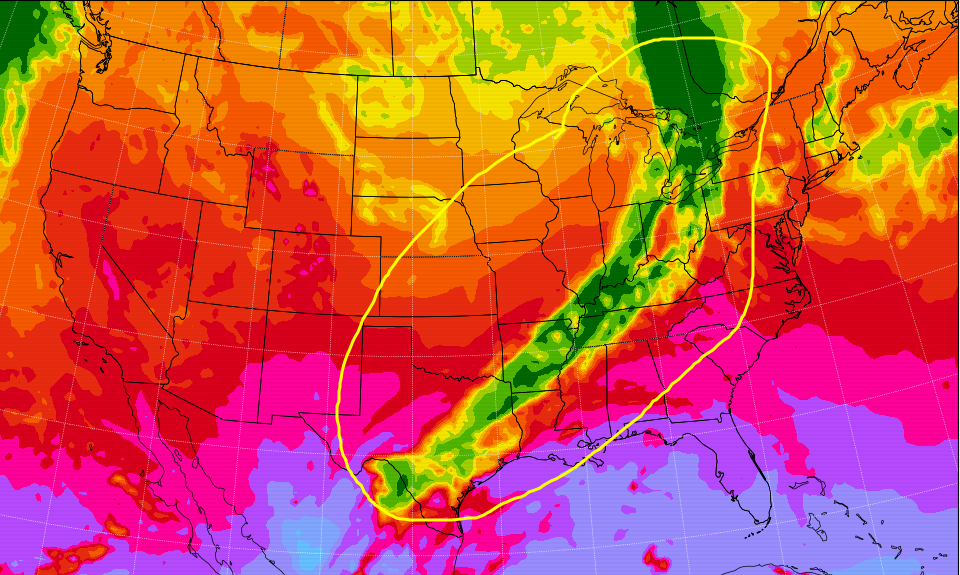
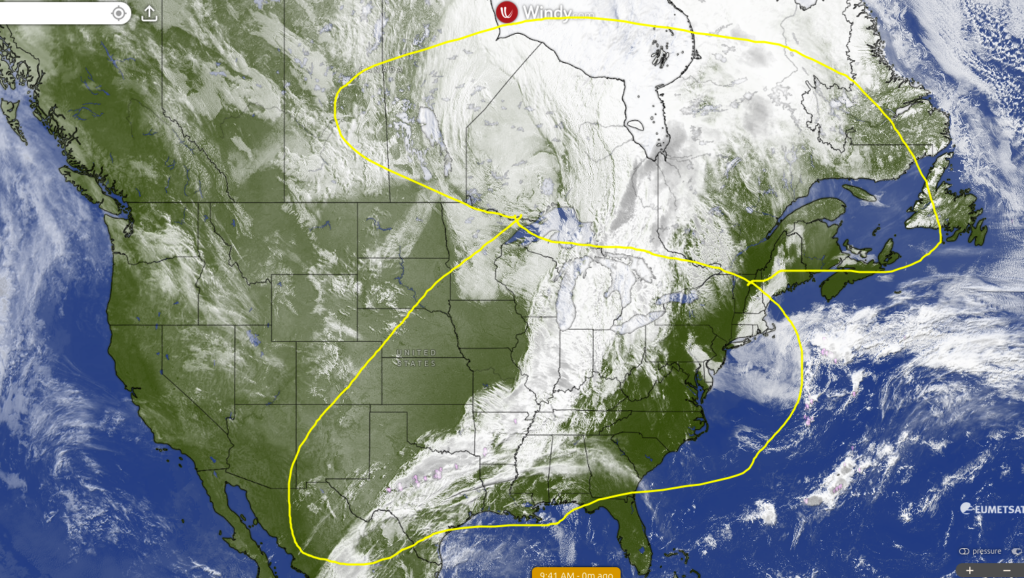
The strong storm system over the United States is a monster with air masses colliding violently which produces plasma lightening discharges and tornadoes. The system extends all the way to north of Canada as the polar vortex breaks down further. The jet stream is also broken apart further but from the data, the Solar winds are penetrating through a null point possibly interacting with the solar wind from the Exosphere into the Thermosphere.
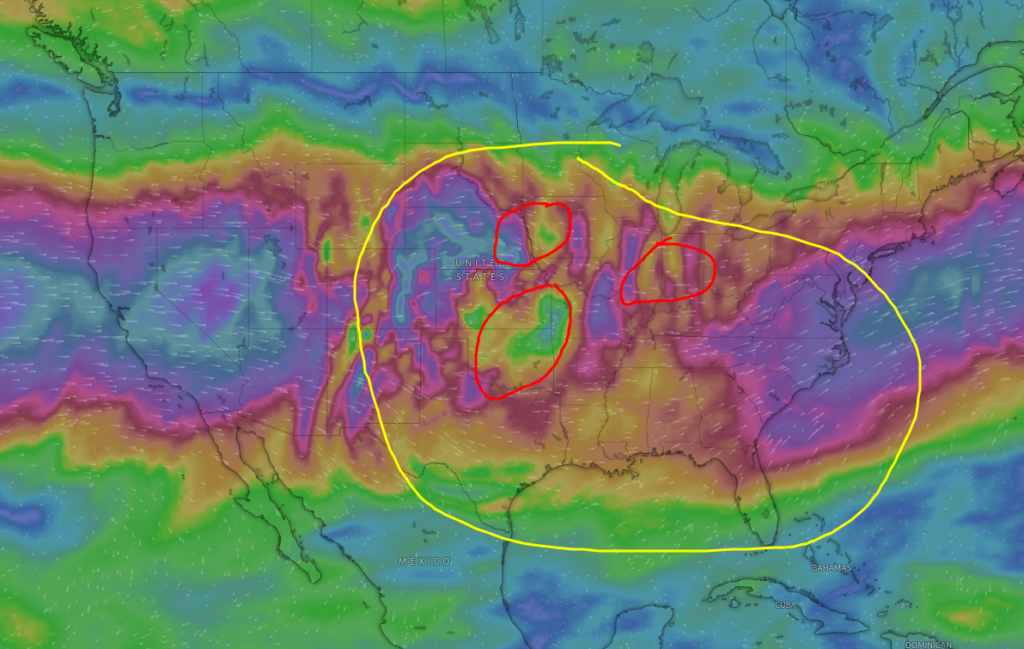
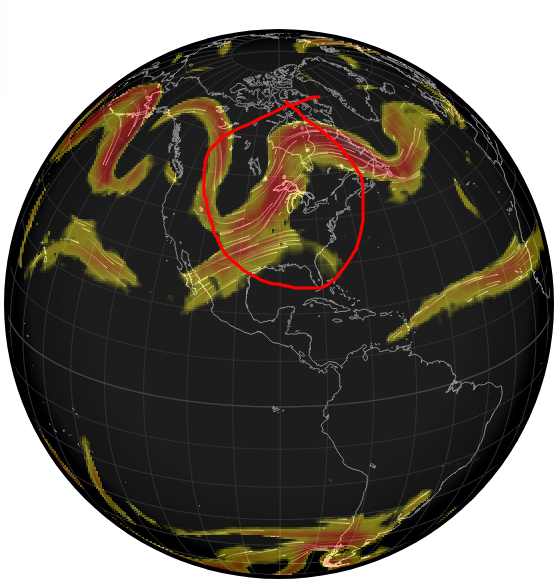
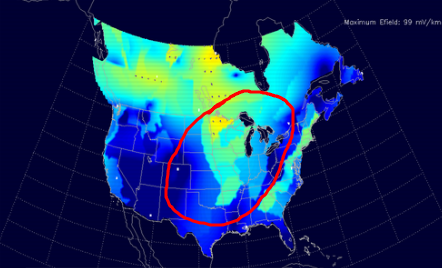
Also interesting to note that earlier today, this Midwest region did experienced an higher electrical current at the same place where these severe storms are formed.
:Product: Forecast Discussion
:Issued: 2026 Apr 18 1230 UTC
# Prepared by the U.S. Dept. of Commerce, NOAA, Space Weather Prediction Center
#
Solar Activity

.24 hr Summary...
Solar activity was at low levels. Region 4416 (N22W85, Cso/beta)
produced the largest event of the period, a C1.6 flare at 18/0704 UTC,
as it rotated around the western limb. Region 4419 (N13E8,
Eki/beta-gamma) displayed slight decay and consolidation in its trailing
spots, with the leader spots separating yet decaying as well. Region
4415 (S18W68, Hsx/alpha) remained unchanged and was unremarkable.

From around 18/0730-0823 UTC, an approximately 30 degree long eruptive
filament was observed in GONG H-alpha and GOES-19 SUVI imagery lifting
off the solar disk. The associated CME will be modeled when coronagraph
imagery becomes available.

No other Earth directed CMEs were observed in coronagraph imagery.

.Forecast...
Solar activity is expected to be low with a chance for M-class (R1-R2,
Minor-Moderate) flares on 18-20 Apr, primarily due to the flare
potential of Region 4419.

Energetic Particle

.24 hr Summary...
The greater than 2 MeV electron flux at geosynchronous orbit reached
high levels with a peak of 2,441 pfu observed at 17/1650 UTC. The
greater than 10 MeV proton flux was at background levels.

.Forecast...
The greater than 2 MeV electron flux is expected to briefly drop to
normal to moderate levels on 18 Apr with the arrival of a negative
polarity CH HSS. Flux levels are expected to increase back to high
levels on 19-20 Apr. The greater than 10 MeV proton flux is expected to
continue at background levels on 18-20 Apr.

Solar Wind

.24 hr Summary...
Solar wind parameters were at nominal levels the first half of the
reporting period. At around 17/2300 UTC, enhancements were noted as the
anticipated CH HSS moved into a geoeffective position. Total field
increased to a peak of 17 nT, while the Bz component was mostly
negative, seeing a maximum southward deflection to -14 nT. Solar wind
speeds varied between approximately 280-360 km/s before gradually
increasing to a maximum velocity of ~540 km/s. Phi rotated into a
negative orientation just after 18/2300 UTC.

.Forecast...
Solar wind parameters are expected to remain enhanced on 18 Apr as
negative polarity CH HSS influence persists. Solar wind speeds ranging
from 600-700 km/s are likely based on recurrent values. Enhanced
conditions are expected to continue through 20 Apr.

Geospace

.24 hr Summary...
The geomagnetic field reached G1 (Minor) levels before increasing to G2
(Moderate) levels after 18/0825 UTC.

.Forecast...
G1-G2 (Minor-Moderate) geomagnetic storming levels are expected on 18
Apr as negative polarity CH HSS geomagnetic conditions persist. Active
to G1 (Minor) levels are expected to continue through 19 Apr, followed
by unsettled to active conditions on 20 Apr, as HSS effects linger.
About The Author