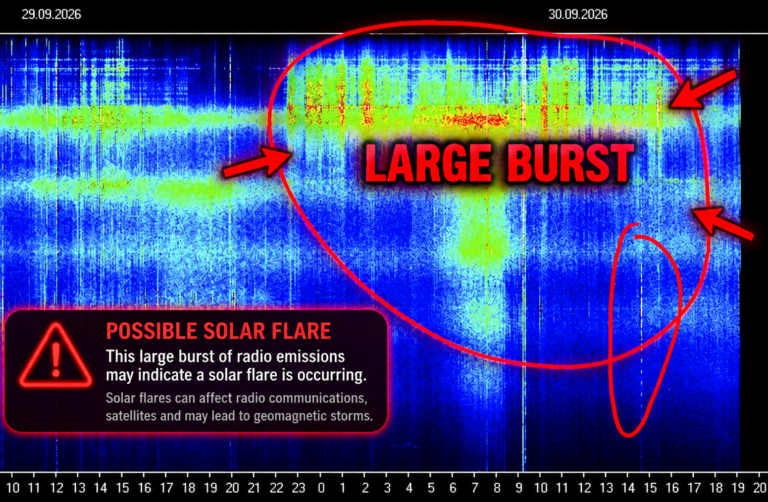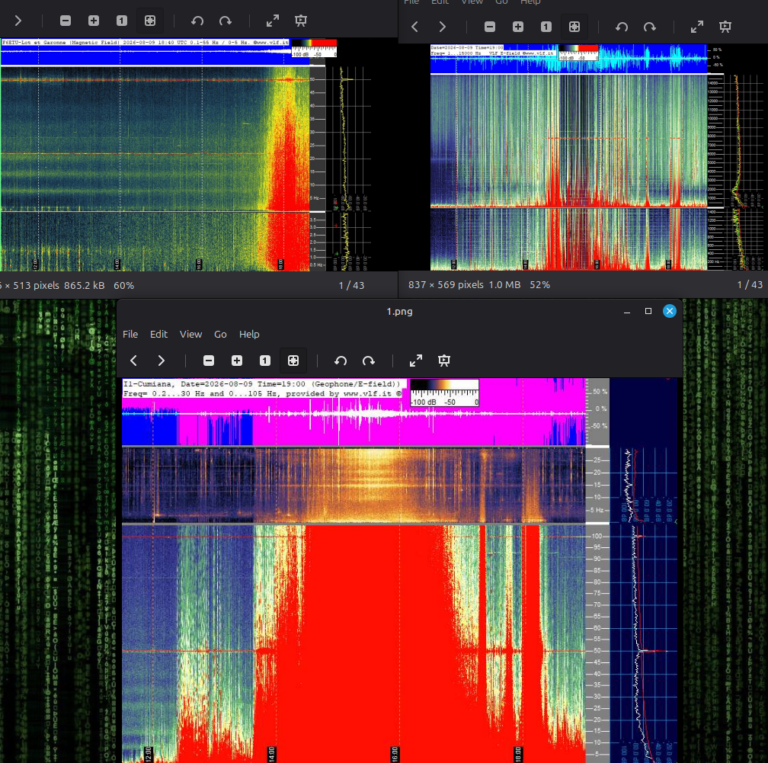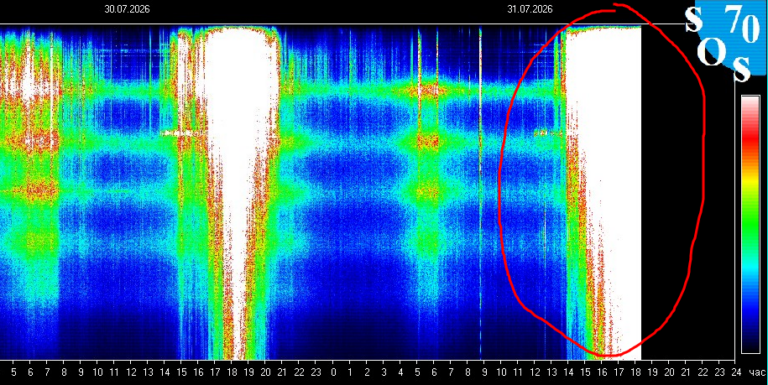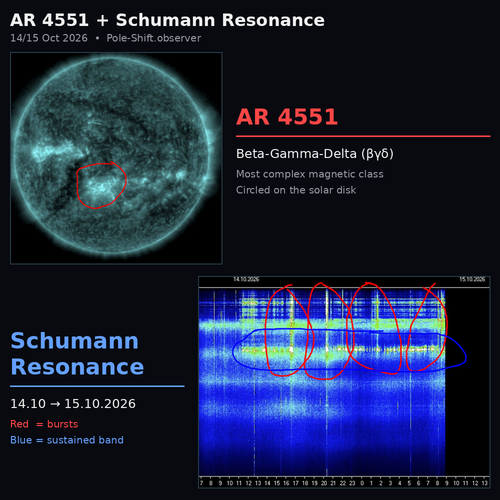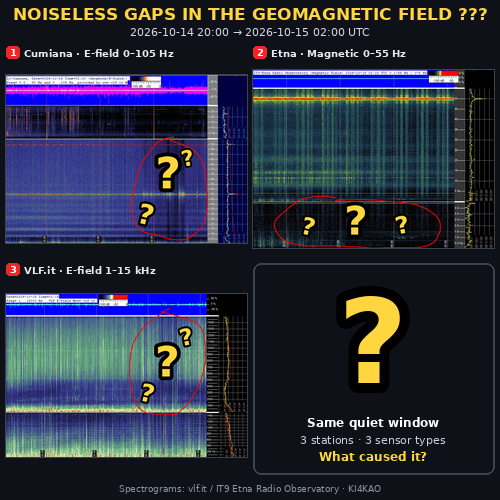
New day with lots of power and energy currently building on Earth. The arrival of the convergence of planets is building geomagnetic disturbance but this build up is still happening.
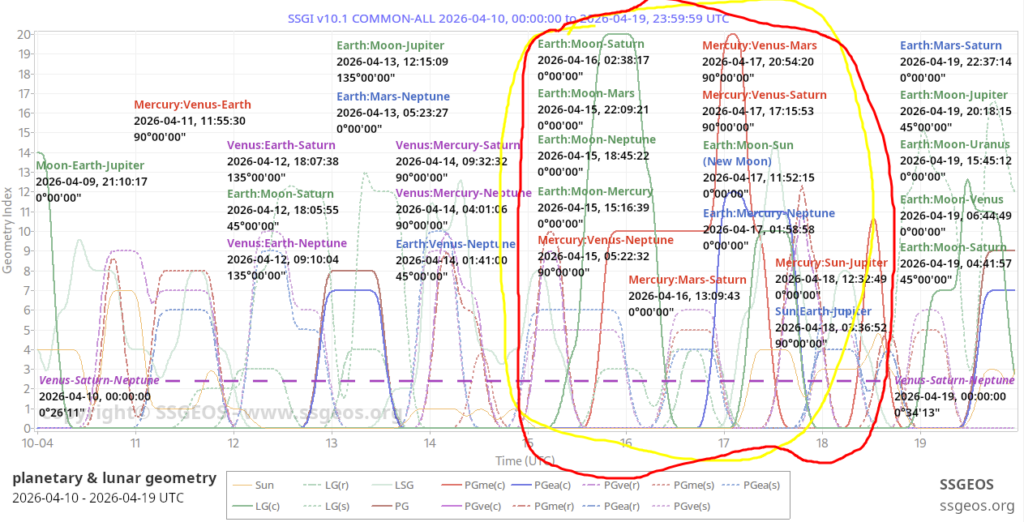
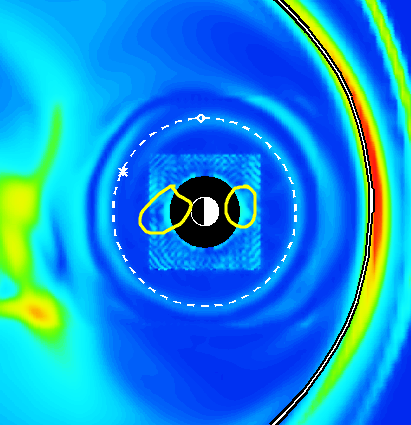
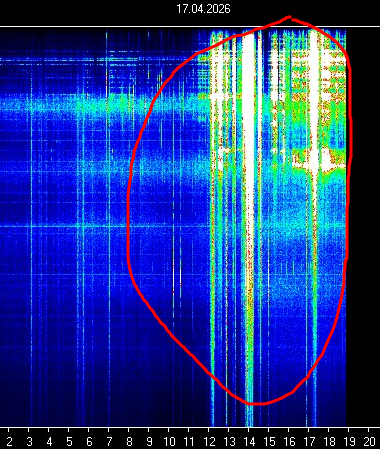
This build is being seen worldwide and local seismic sensors are picking up on the movements. The Schumann is of course, picking up on the activity as well.
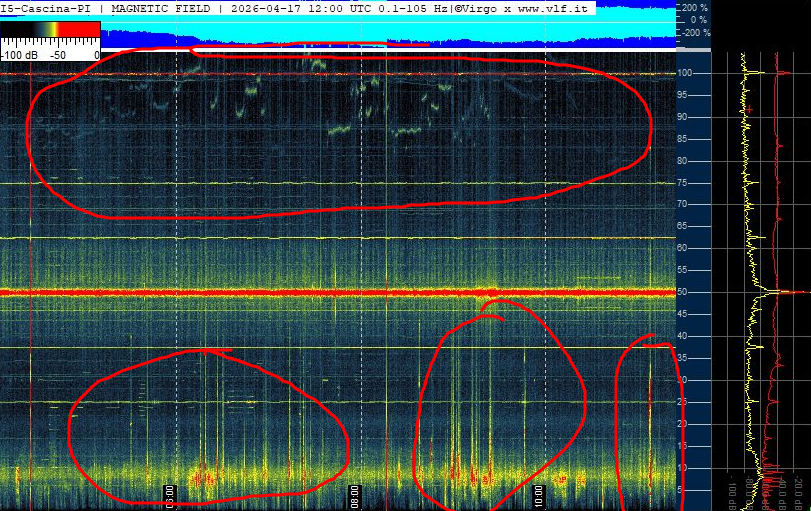
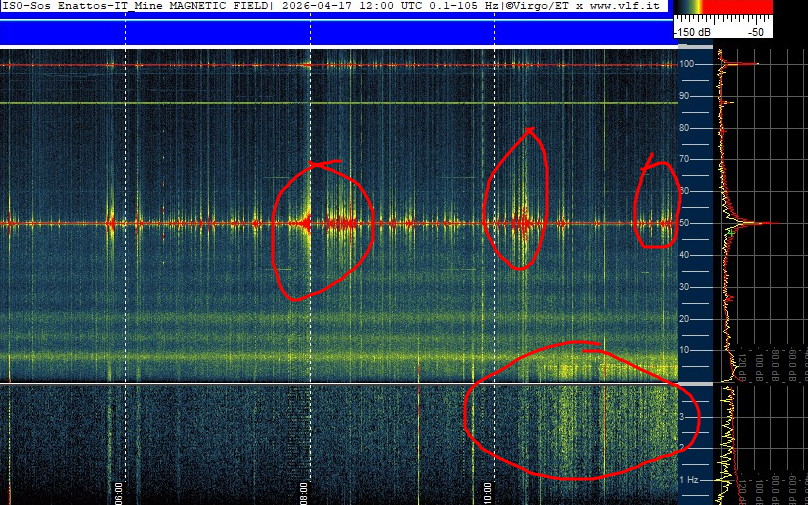
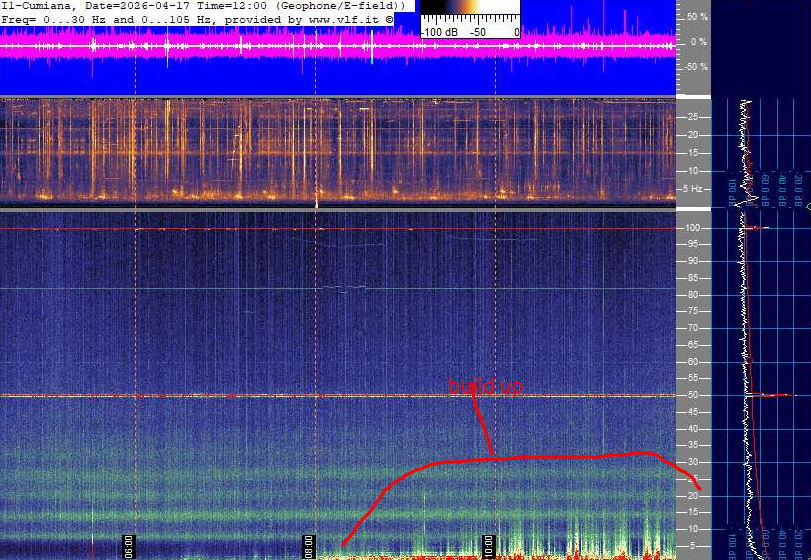
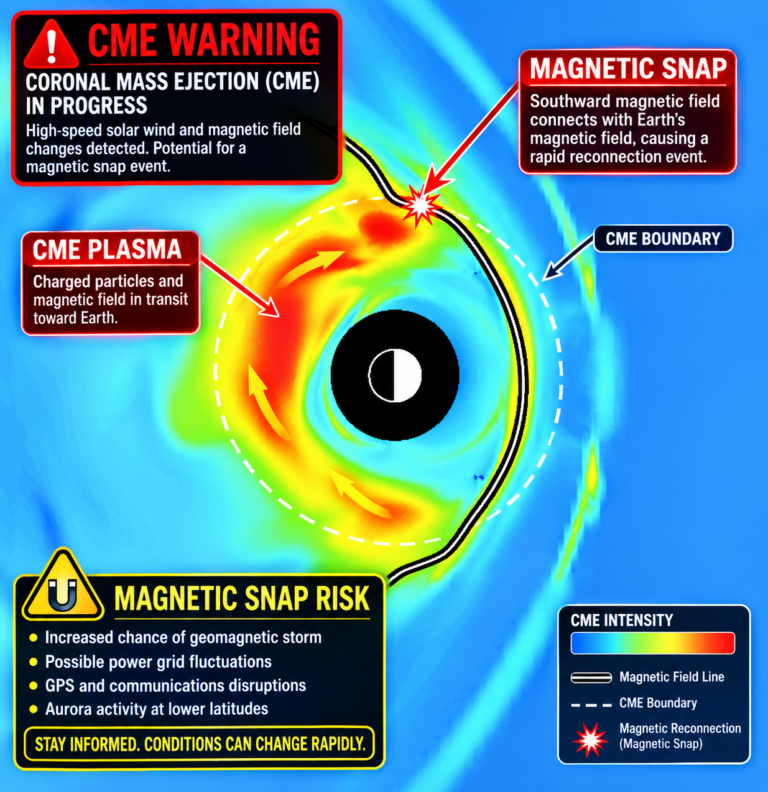
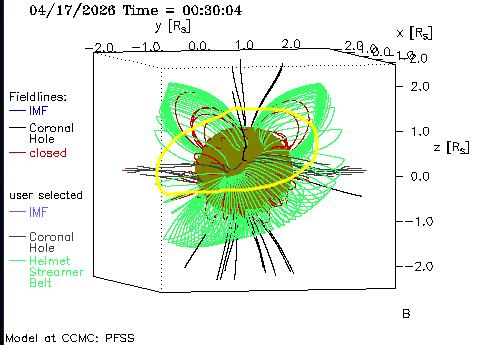
We will see this build up continue throughout today into tomorrow. With the arrival of the coronal hole stream and a potential M-Class flare, our magnetic field is about to become extremely disturbed.
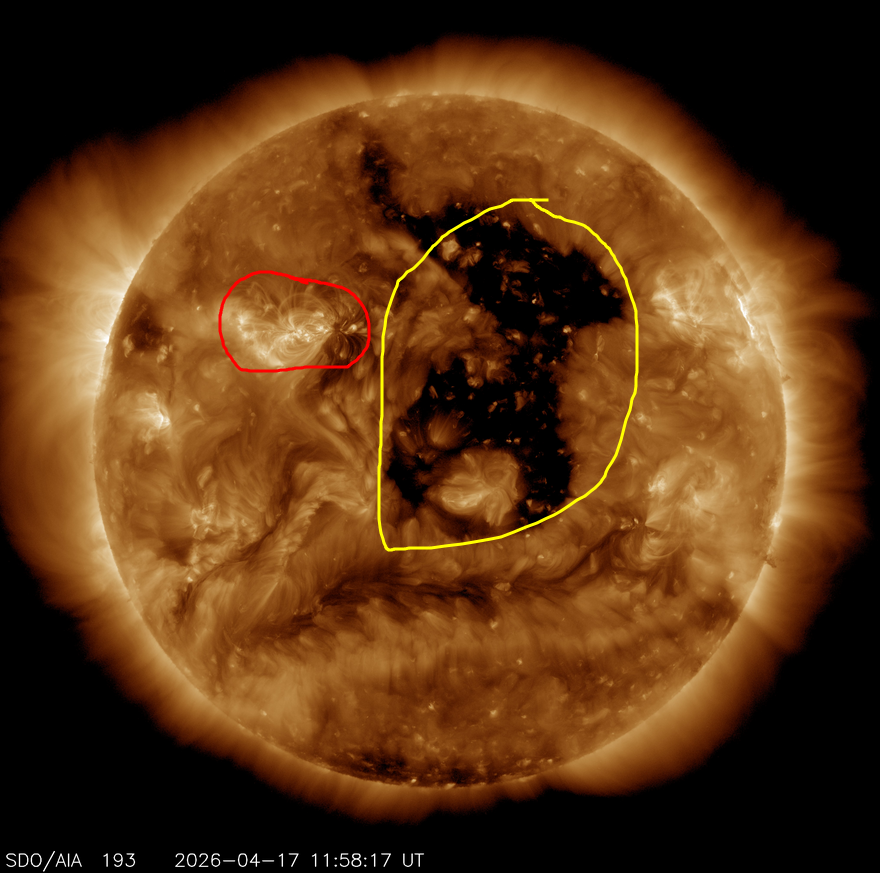
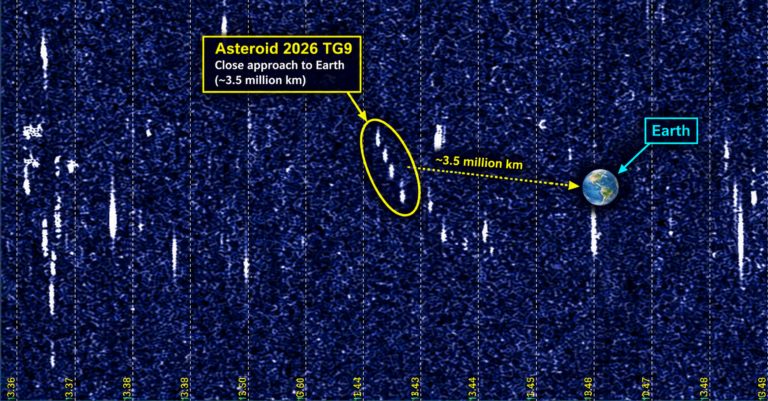
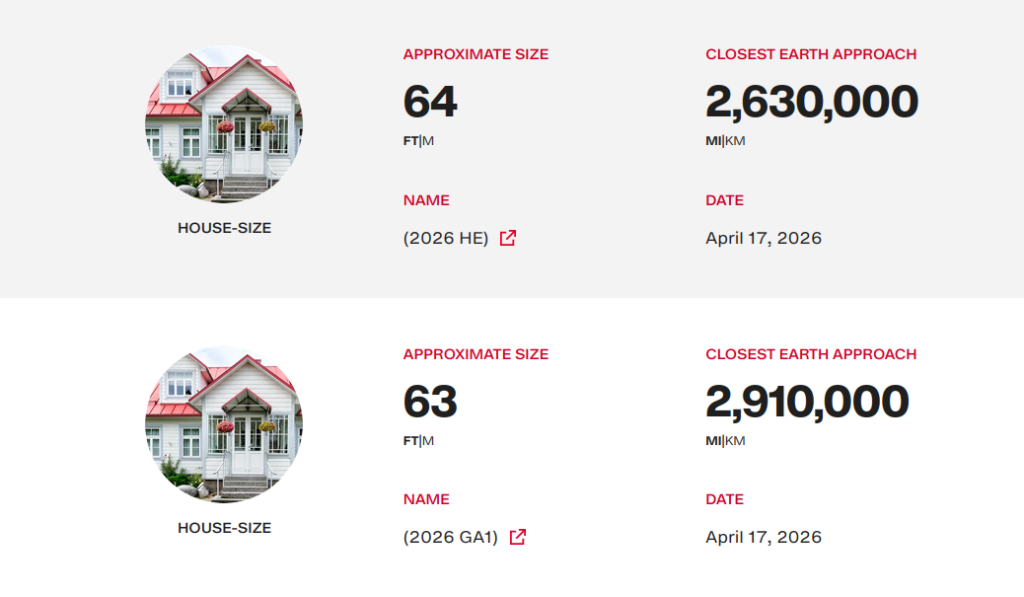
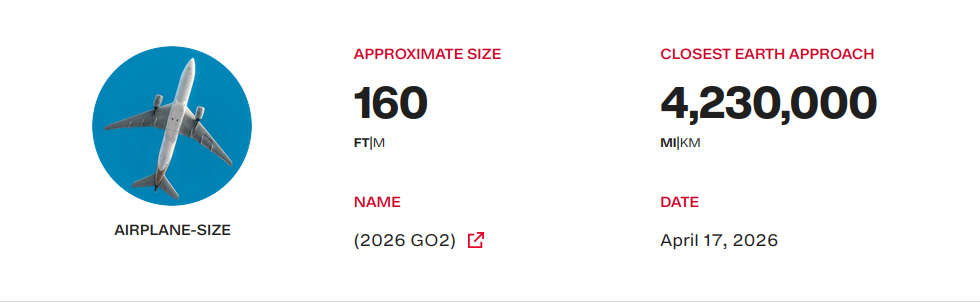
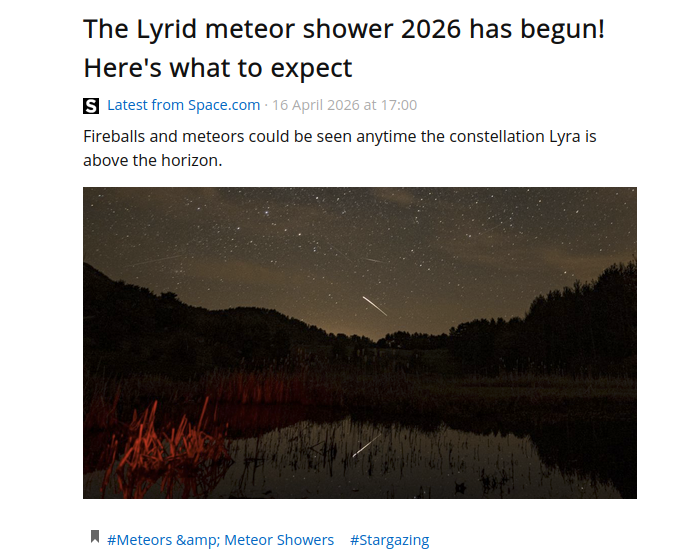
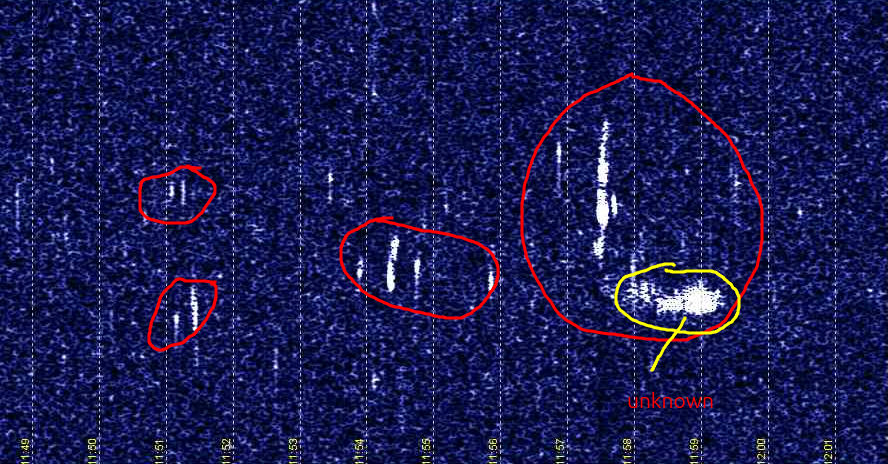
We do have three asteroids on watch today and luckily they are all far away from Earth for fragments to impact Earth. We also have the beginning of the Lyrid meteor shower starting today. It is possible for fireballs today and tomorrow. Graphs are picking up traffic right now.
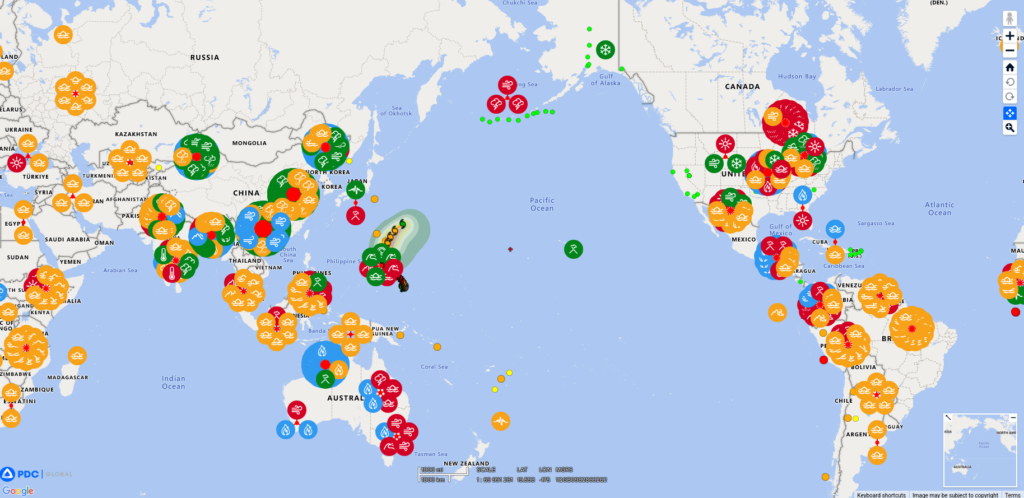
Currently as of this post, we have 538 active hazards on Earth. As Earth oscillates throughout this day, you can expect this number to rise.
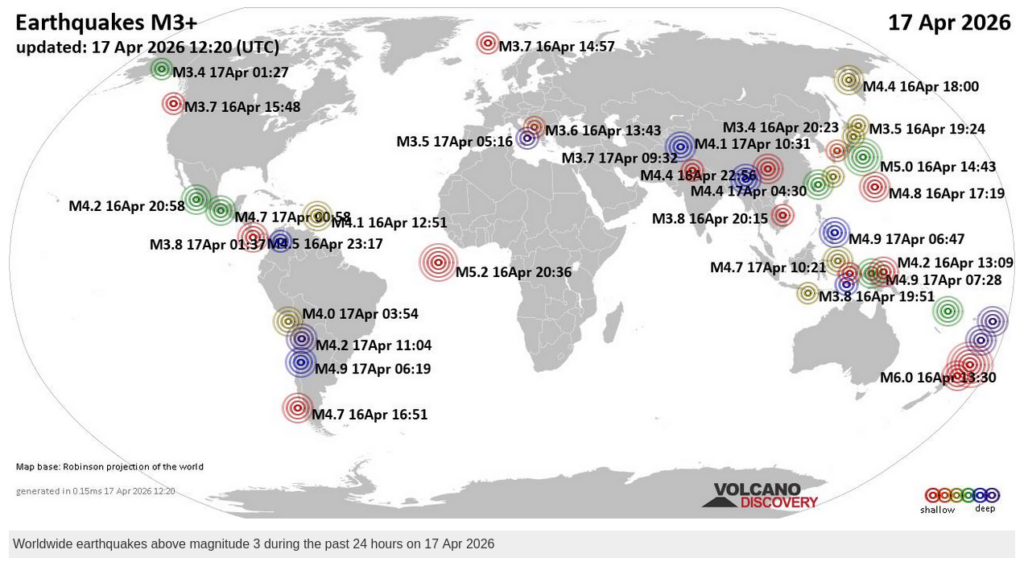
Worldwide Earthquakes are rising in part of the geomagnetic disturbance building and Earth’s outer core transforming. We will see an uptick of stronger M4 and M5 quakes today into tomorrow with a possibility of M6. Possibility of M7 within the next 48 hours.
Thanks to Ben Davidson, NASA, NOAA for the data, research and information for more space and geopyshical weather.
:Product: Geophysical Alert Message wwv.txt
:Issued: 2026 Apr 17 1205 UTC
# Prepared by the US Dept. of Commerce, NOAA, Space Weather Prediction Center
#
#          Geophysical Alert Message
#
Solar-terrestrial indices for 16 April follow.
Solar flux 108 and estimated planetary A-index 3.
The estimated planetary K-index at 1200 UTC on 17 April was 1.00.

No space weather storms were observed for the past 24 hours.

Space weather for the next 24 hours is predicted to be moderate.
Geomagnetic storms reaching the G2 level are likely.
:Product: Forecast Discussion
:Issued: 2026 Apr 17 1230 UTC
# Prepared by the U.S. Dept. of Commerce, NOAA, Space Weather Prediction Center
#
Solar Activity
.24 hr Summary...
Solar activity was at low levels. The majority of flaring activity was
from Region 4419 (N13E29, Eki/beta-gamma). The largest flare was a C4.1
at 17/0442 UTC from Region 4419. Slight growth and consolidation was
observed in the region. Slight growth was observed in the intermediate
area of Region 4416 (N20W64, Dso/beta).
No Earth directed CMEs were observed in coronagraph imagery.
.Forecast...
Solar activity is expected to be low with a chance for M-class (R1-R2,
Minor-Moderate) flare on 17-19 Apr primarily due to the flare potential
of Region 4419.
Energetic Particle
.24 hr Summary...
Electrons greater than 2 MeV at geosynchronous orbit reached high levels
with a peak of 2,407 pfu observed at 16/1710 UTC. The greater than 10
MeV proton flux was at background levels.
.Forecast...
The greater than 2 MeV electron flux is expected to reach high levels on
17 and 19 Apr. A brief drop to moderate levels is expected on 18 Apr
with the arrival of a negative polarity CH HSS. The greater than 10 MeV
proton flux is expected to continue at background levels on 17-19 Apr.
Solar Wind
.24 hr Summary...
Solar wind parameters continued at nominal levels - although anomalous
data spikes have existed through the period. Total field ranged from 4-6
nT while the Bz component was between +4/-3 nT. Phi angle was oriented
in a positive sector.
.Forecast...
Solar wind parameters are expected to become enhanced by mid to late on
17 Apr with the arrival of a CIR followed by negative polarity CH HSS
activity. Solar wind speed ranging from 600-700 km/s are likely based on
recurrent values. Enhanced conditions are expected to persist through 19
Apr.
Geospace
.24 hr Summary...
The geomagnetic field was quiet.
.Forecast...
The geomagnetic field is expected to be quiet to unsettled through early
on 17 Apr. By mid to late on 17 Apr, CH HSS activity is expected to
cause unsettled to active periods with G1-G2 (Minor-Moderate)
geomagnetic storming likely. Unsettled to G2 (Moderate) levels are
expected to continue through 18 Apr followed by unsettled to G1 (Minor)
conditions on 19 Apr as HSS effects persist.About The Author