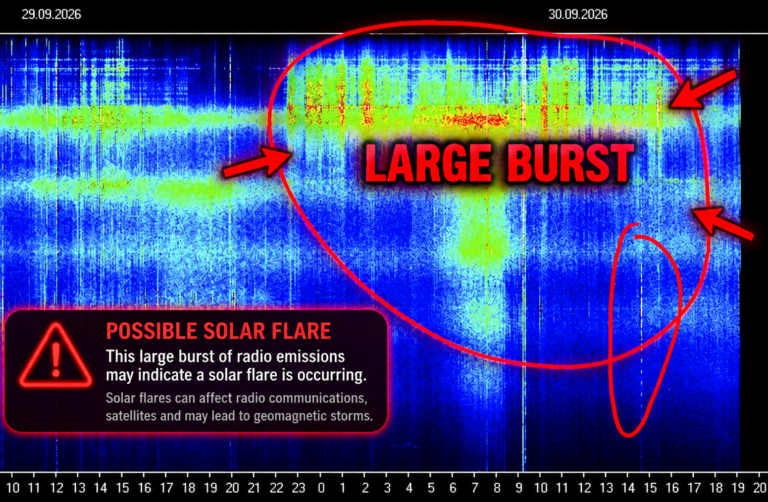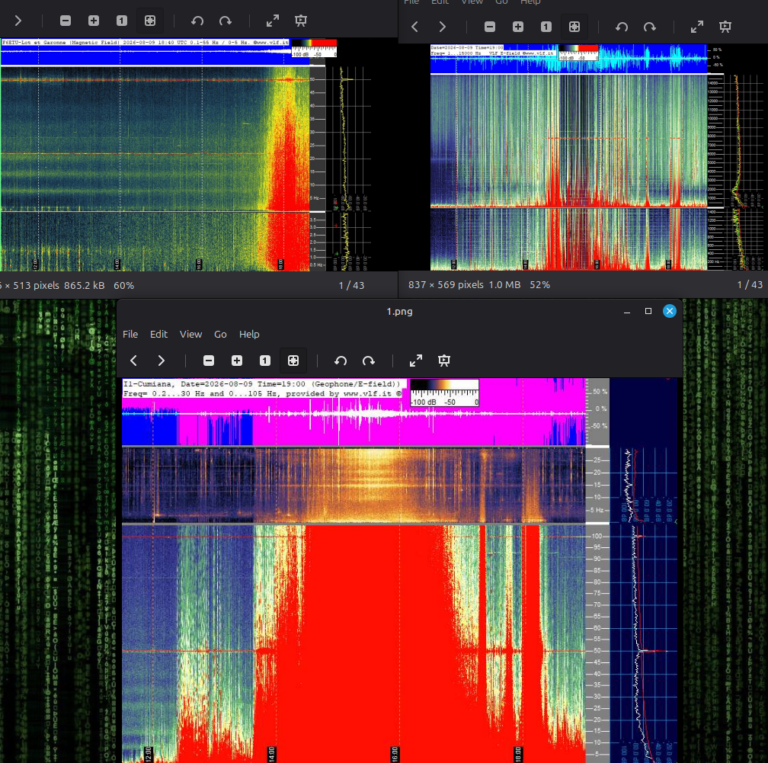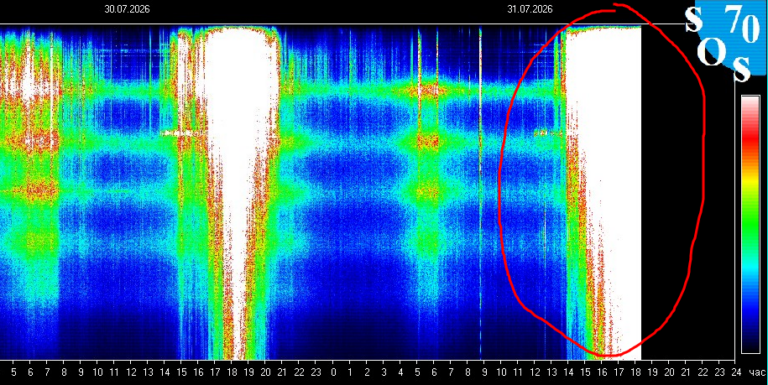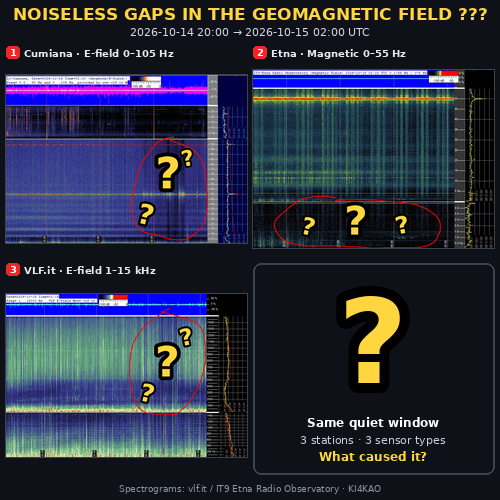
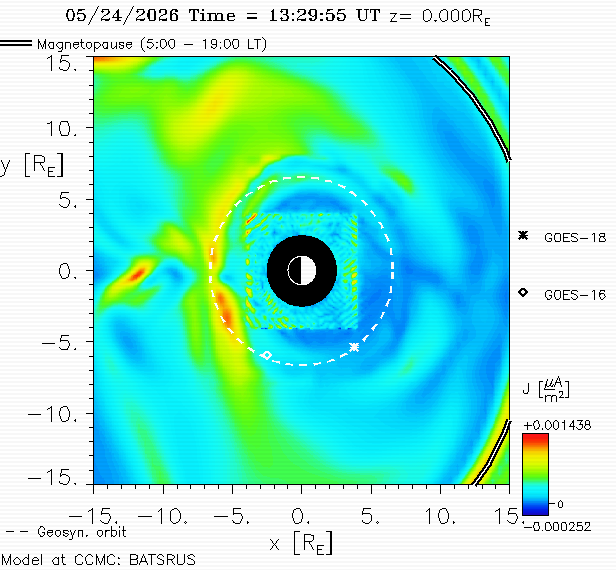
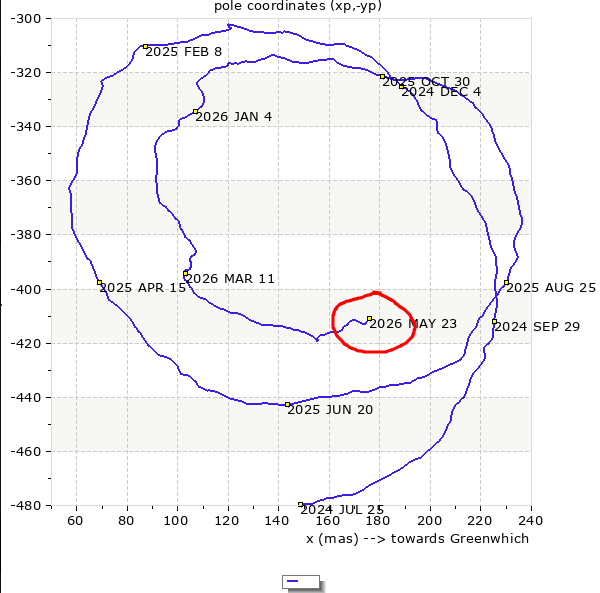
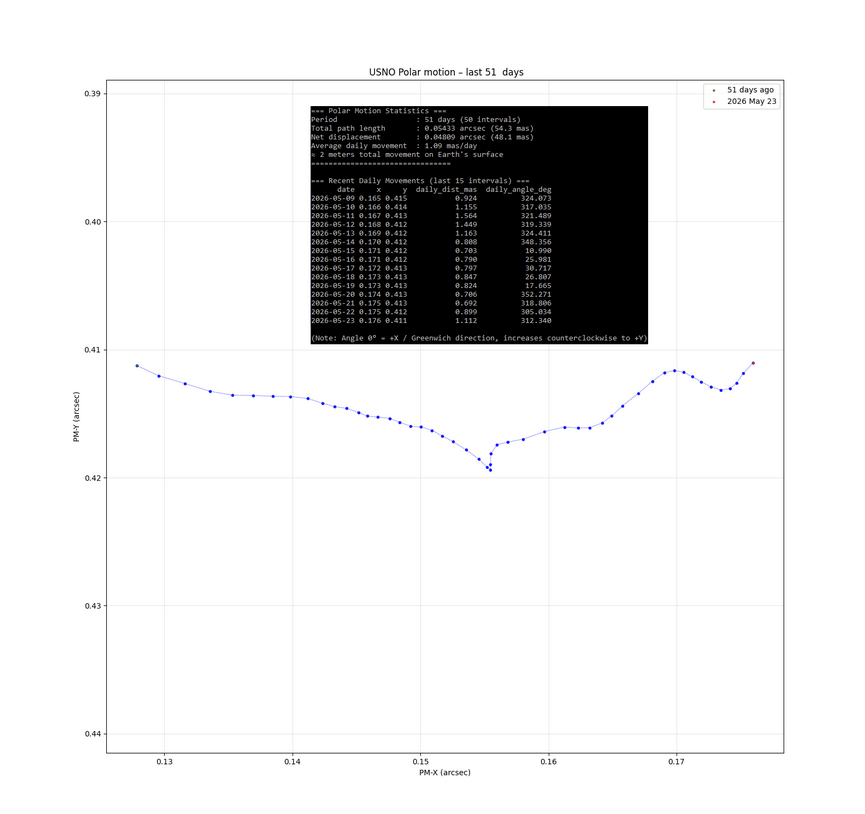
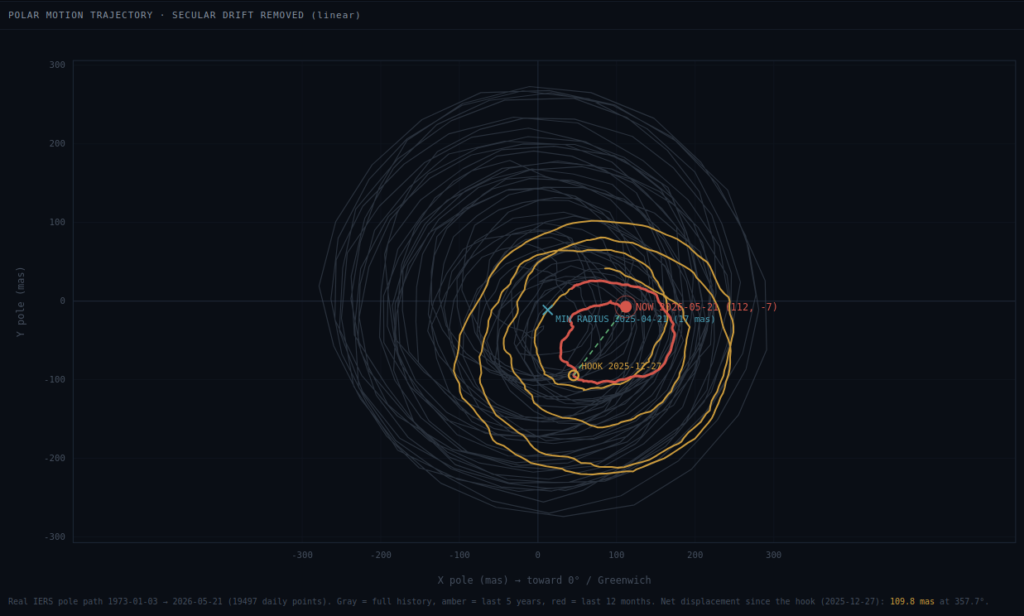
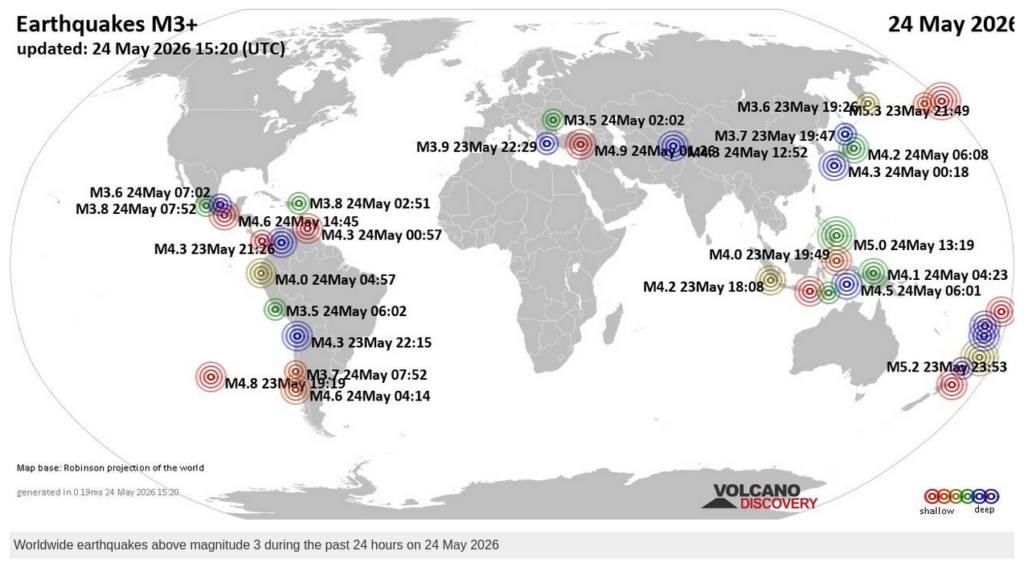
24 hours of the geomagnetic disturbance continues with high Density magnetism swimming around Earth. Earth is shy a month before a change in direction of the Chandler wobble of the planet which we can see in the last 48 hours, strong tectonic unrest has increased and the planetary and lunar geometry continues into tomorrow.
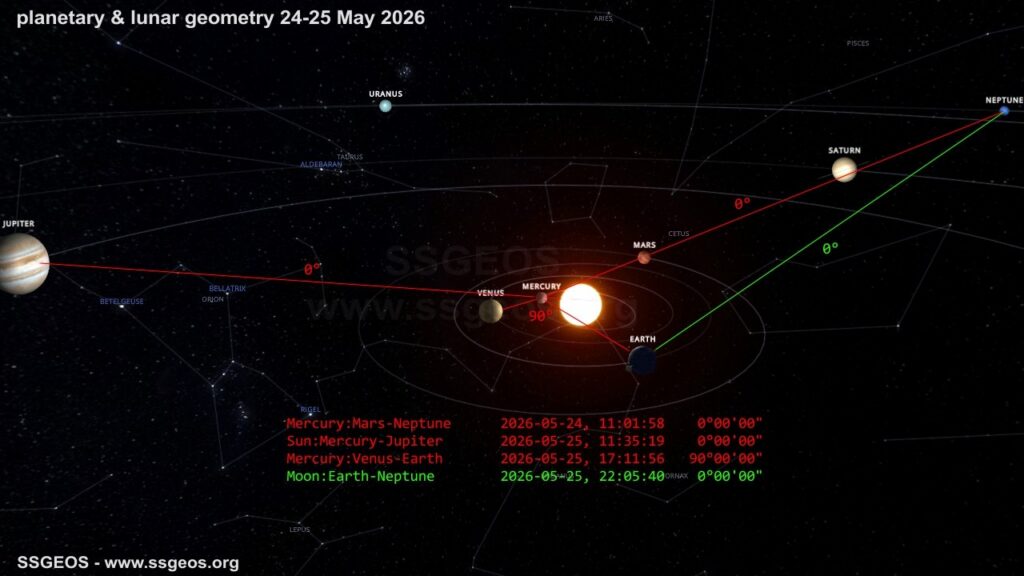
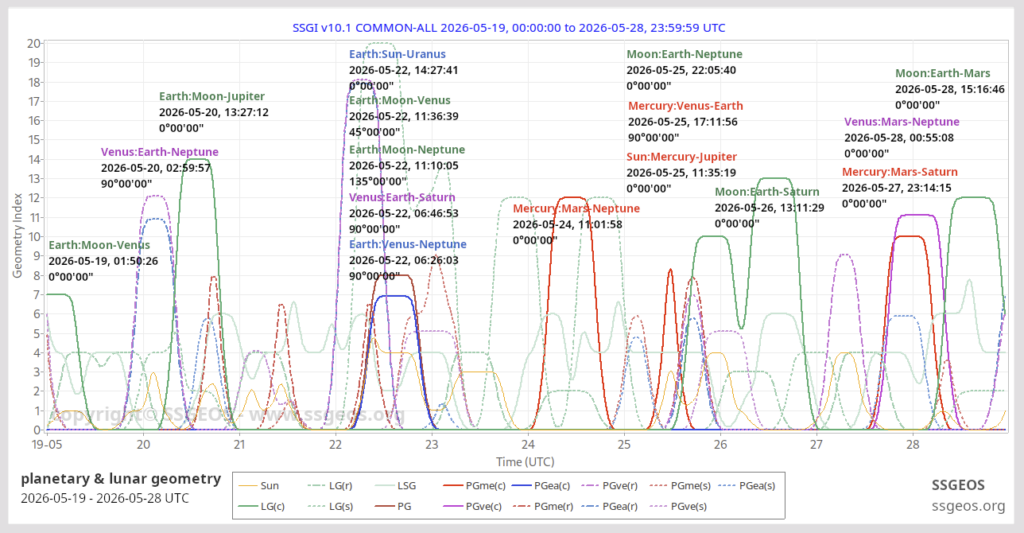
The Chandler Wobble of the planet begins to shift, transferring kinetic energy upwards towards the crust. We will continue to see more M5 quakes in the next 48 hours and a M6 quake.
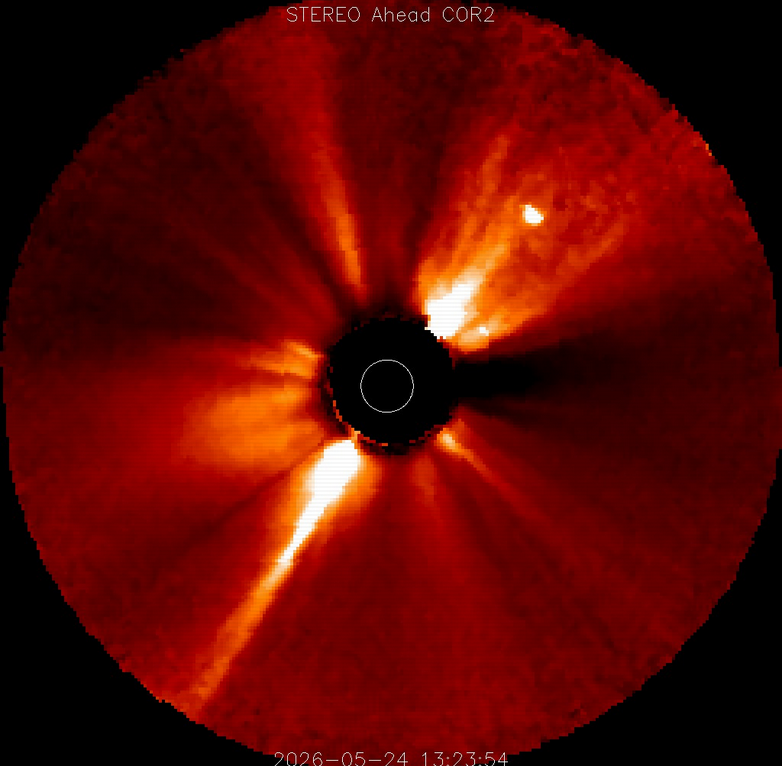
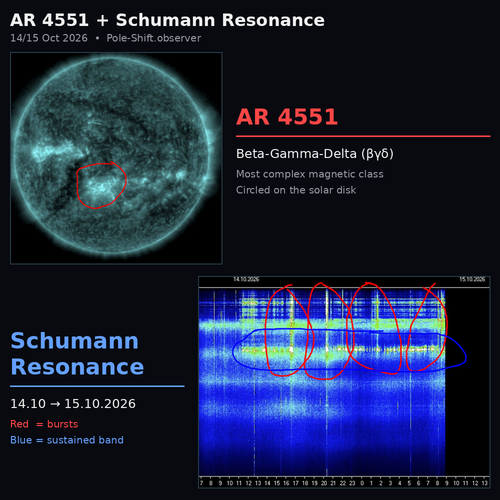
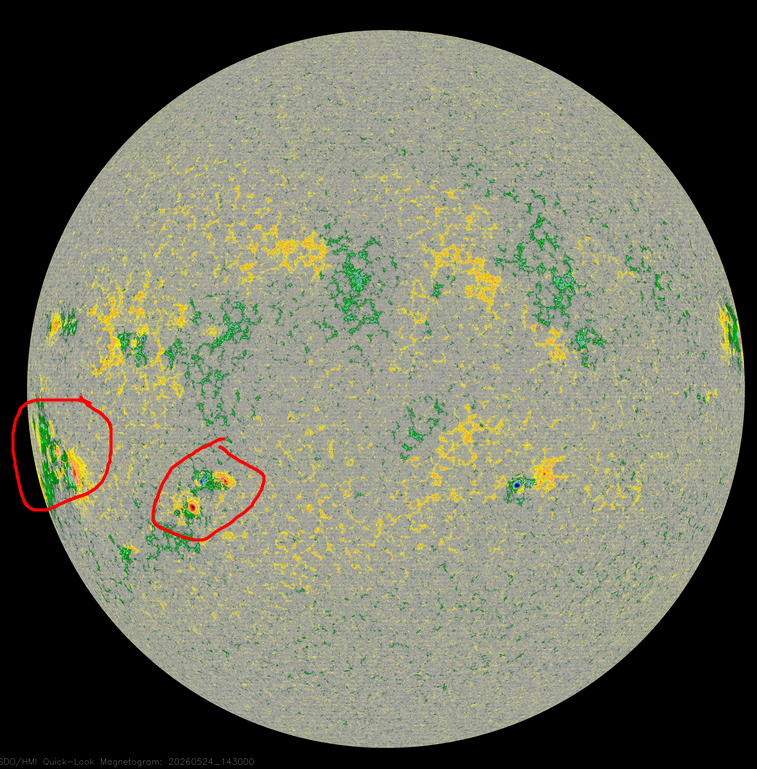
Solar activity Earth facing has been calm with a few filaments and low activity sunspots however, the sun remains highly active with large flaring on the far side and a highly complex region 4446 which NOAA is currently looking into which can be active. Chance for M-class flaring increases. Type II Radio Emission have been active today and according to Tomsk Schumann, we may possibly see an M-Class in the next 24 – 48 hours.
With the changes and collapse of the Chandler Wobbling of the planet, the Northern Hemisphere is beginning to see a rise of heat and energy. Due to the break down of the wobble, AMOC will severely be impacted and also the jet stream.
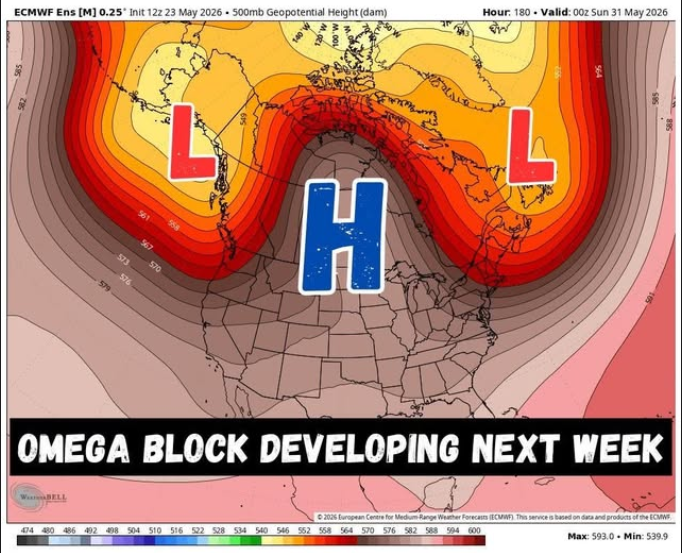
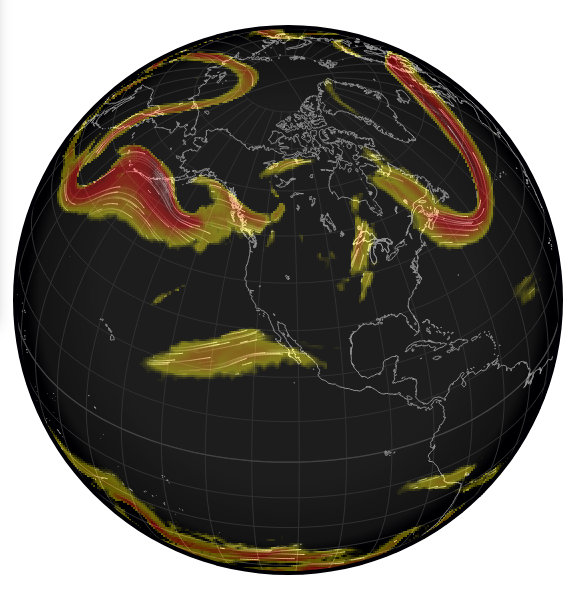
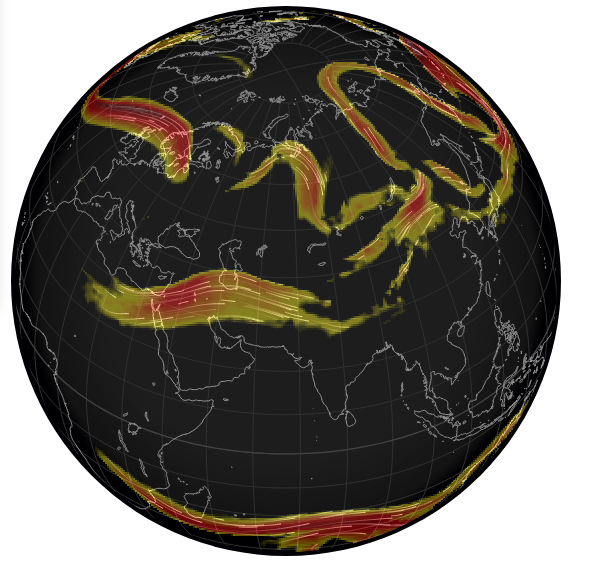
Severe storms and super systems are forming and we know from trends, these can bring massive storm systems and ripe conditions for severe storms. We will see more strange weather and I have seen enough reports that we can even see more chances of “ball lightning” due to the conductivity of Earth and the modified atmosphere of the planet Earth.
More News:
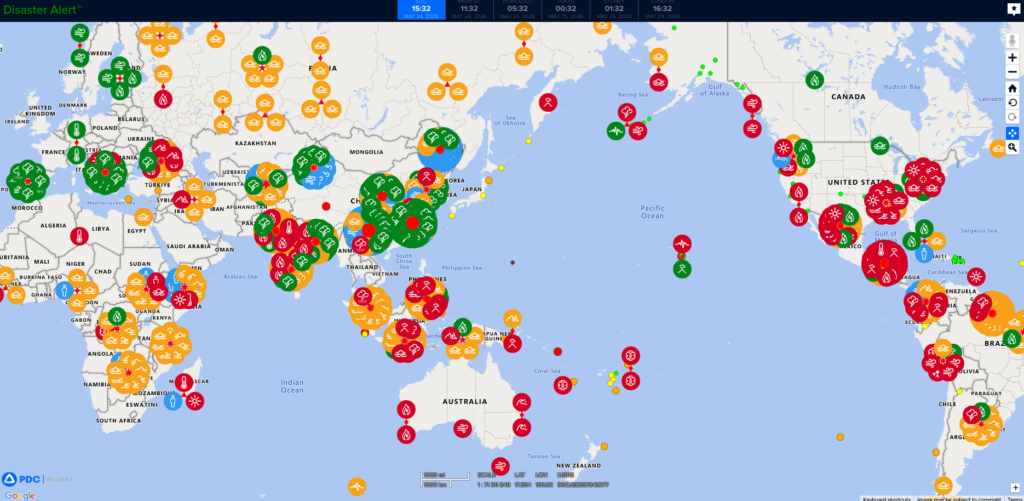
Currently there are 565 currently active climate alerts.
:Product: Forecast Discussion
:Issued: 2026 May 24 1230 UTC
# Prepared by the U.S. Dept. of Commerce, NOAA, Space Weather Prediction Center
#
Solar Activity

.24 hr Summary...
Solar activity remained at low levels. The majority of the C-class
activity originated from the eastern and western limbs of the Sun. The
strongest flare was a C5.5 flare at 23/2204 UTC. Region 4441 (N08W78,
ESO/beta) was responsible for a C2.8 flare at 23/1954 UTC. This event
also produced a Type II radio sweep (est. 932 km/s). The CME signatures
identified in available coronagraph imagery were associated with
activity on or behind the Suns limb. No Earth-directed components were
suspected.

Newly numbered Region 4447 (S15E32, Dao/beta) was a separation of the
northern spots from Region 4444 (S21E36, Hsx/alpha).

.Forecast...
Solar activity is expected to remain at low levels, with a chance for
isolated M-class flares (R1-R2/Minor-Moderate) on 24-26 May, primarily
due to the flare potential of Region 4441 and Region 4446.

Energetic Particle

.24 hr Summary...
The greater than 2 MeV electron flux at geosynchronous orbit remained at
moderate to high levels, reaching a peak level of 4,016 pfu at 23/1555
UTC. The greater than 10 MeV proton flux at geosynchronous orbit
remained at background levels.

.Forecast...
The greater than 2 MeV electron flux is expected to remain at moderate
to high levels on 24-25 May before returning to low to moderate levels
on 26 May. The greater than 10 MeV proton flux is expected to remain at
background levels through 26 May.

Solar Wind

.24 hr Summary...
Solar wind parameters reflected near-background conditions. Wind speeds
were between 290-330 km/s, total magnetic field strength varied from 3-5
nT. The phi angle was predominantly in a negative orientation.

.Forecast...
Primarily ambient conditions are expected for 24-25 May under a
background solar wind regime. Late on 26 May, enhancements to the solar
wind environment are possible with the anticipated onset of a negative
polarity CH HSS.

Geospace

.24 hr Summary...
The geomagnetic field was at quiet levels.

.Forecast...
Mostly quiet levels are anticipated on 24-25 May under a near-background
solar regime. Periods of unsettled conditions are possible, with a
chance for an isolated active period, late on 26 May with the likely
onset of an approaching -CH HSS.
About The Author