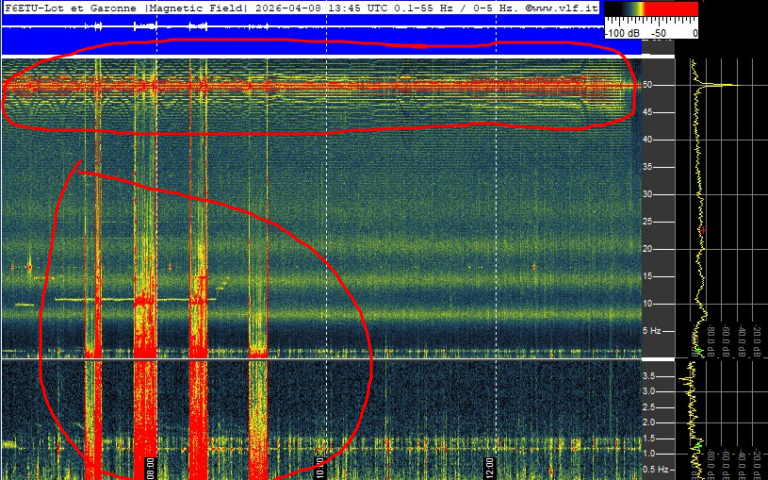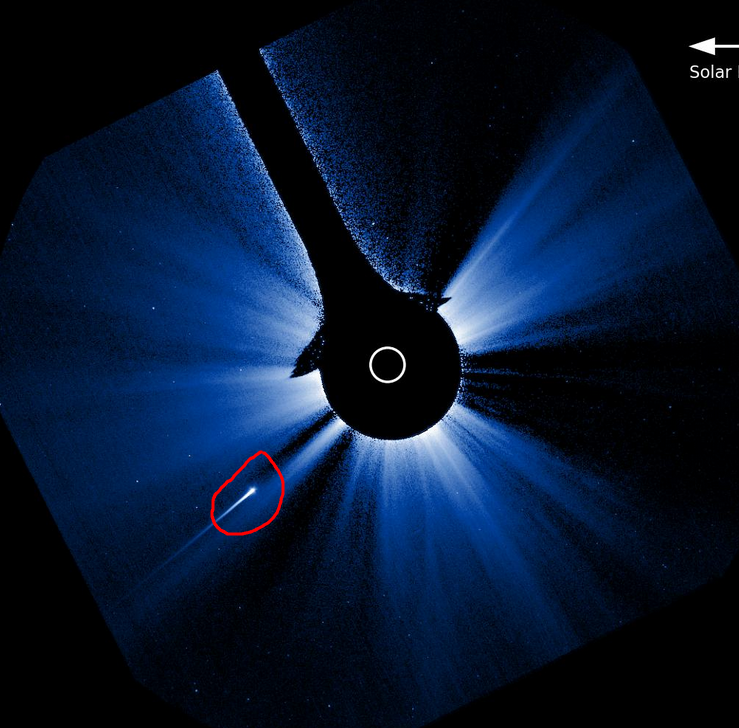
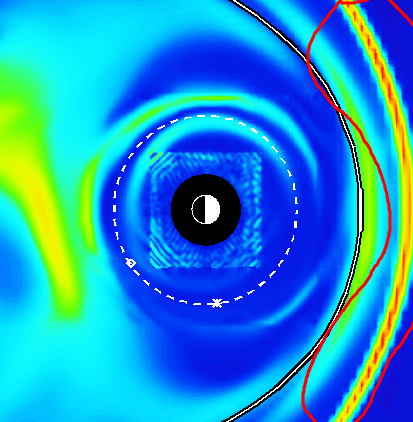
Today appears to be quiet with less than usual activity. This is always a welcome review as Earth’s internal mechanism can self-repair before the next wave of solar activity comes in.
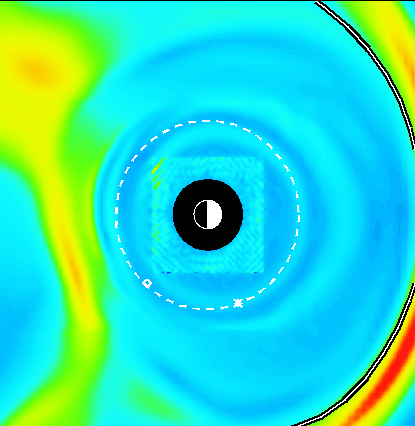
We can see just ahead of the magnetopause, there is pressure knocking against the magnetic barrier. This pressure is a swarm of strong negative energy pushing in.
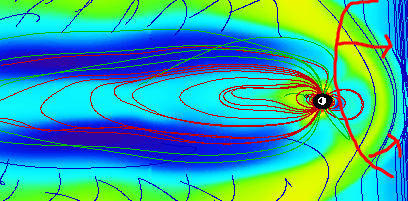
The change in magnetism is a changing process that is not instant. A few hours and the energies can flip the polarity.
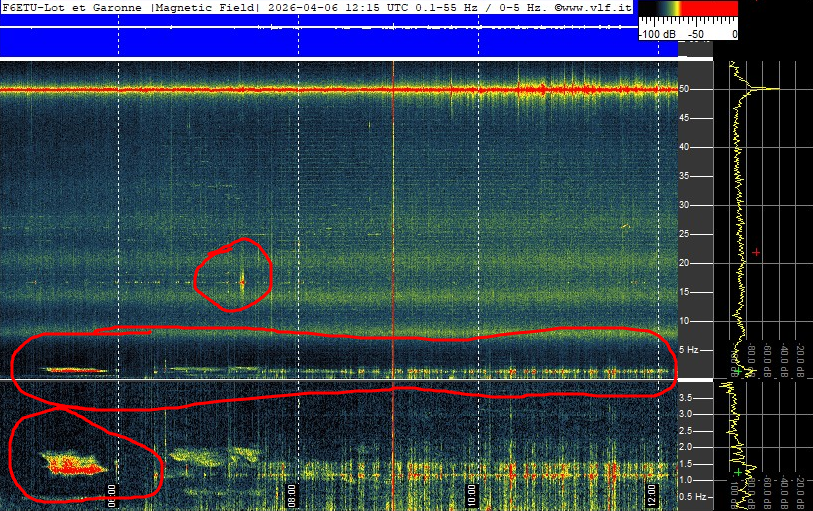
The Schumann exhibited and usual burst earlier today. This may or may not be related to the M5.7 Quake in the Antarctic this morning. However, one of the graphs do indicate a buildup right now of vibrations which normally picks up in 48 hours.
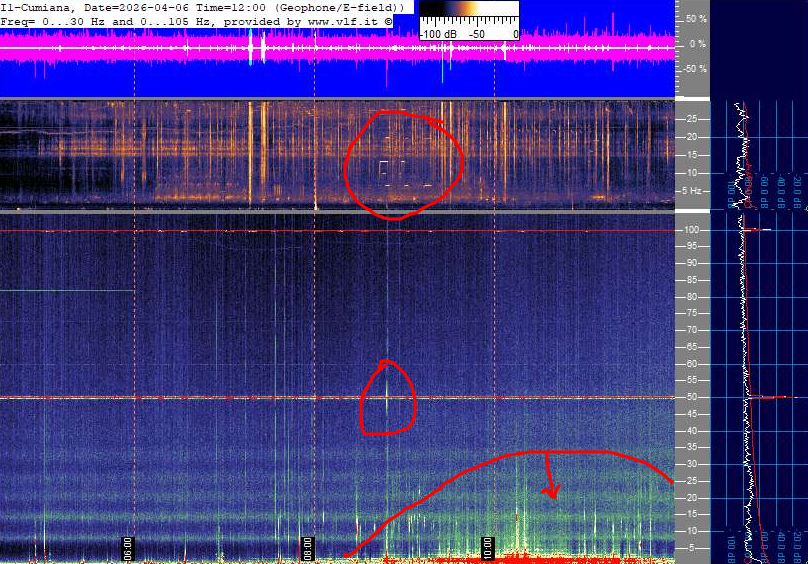
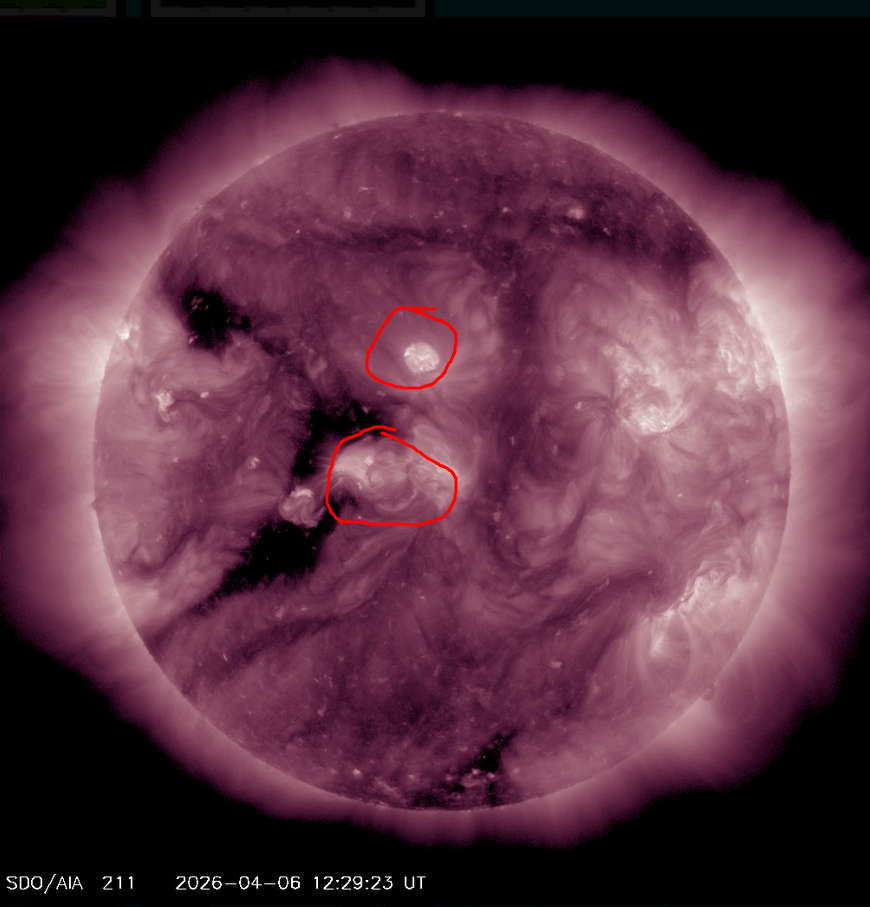
At the time of this writing, the Tomsk station just picked up a burst. This indicates a strong M-class flare is imminent. We have two sunspots and an equatorial coronal stream soon facing Earth. The sunspots are not complex but I will be surprise if these two are the culprit. We shall see few soon.
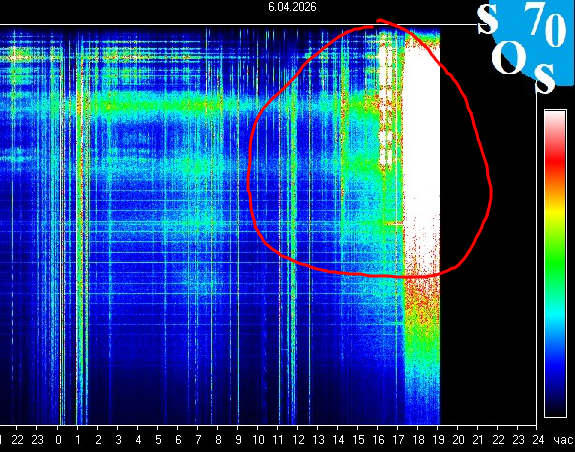
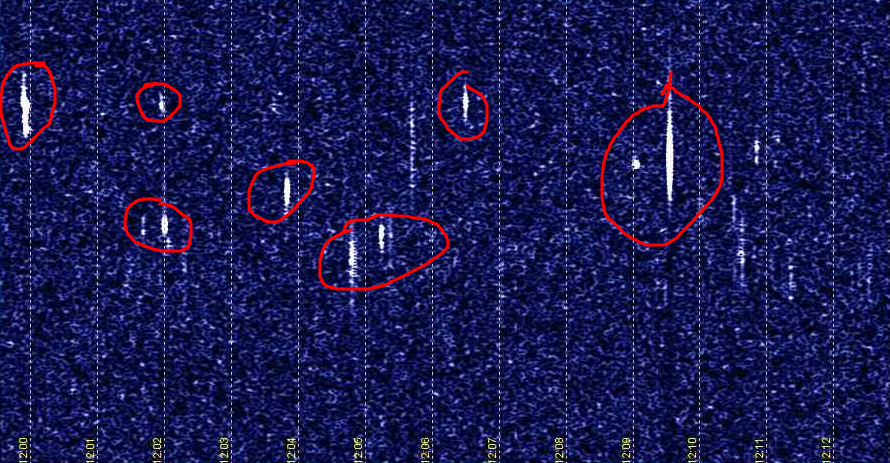
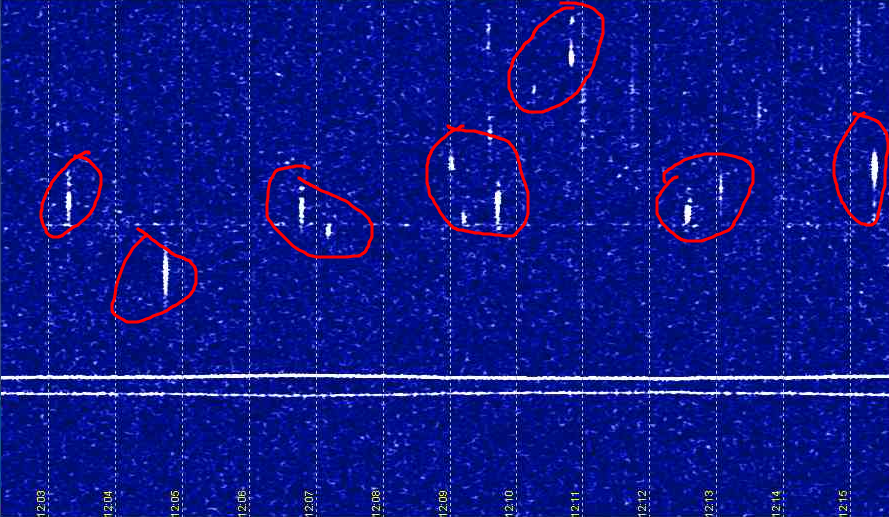
We have two asteroids today on NASA’s radar but far away to pose no threat. The biggest possible threat would be satellite debris but since these energy readings are found in the meteor scatter band, a few of them could also be small fireballs.
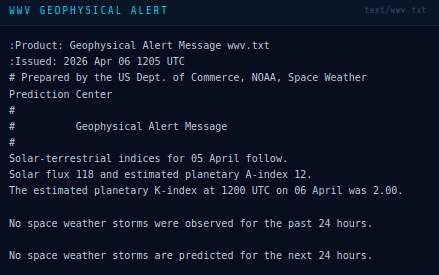
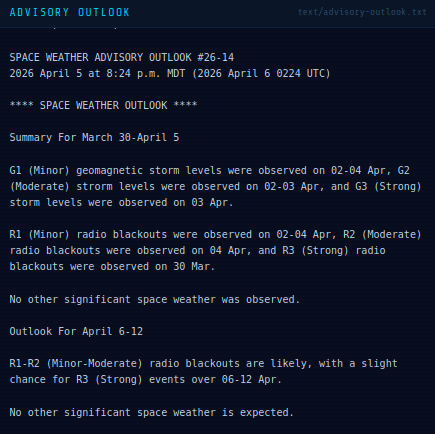
As for the rest of the news, I will start providing the NASA outlook and advisory as part of these news briefs.
:Product: Forecast Discussion
:Issued: 2026 Apr 06 1230 UTC
# Prepared by the U.S. Dept. of Commerce, NOAA, Space Weather Prediction Center
#
Solar Activity

.24 hr Summary...
Solar activity was at low levels. Region 4409 (N02W37, Eai/beta)
produced most of the C-flare activity this period, including a C2.8 at
05/2347 UTC; the strongest of the period. The region exhibited minor
development over the past 24 hours, but remained largely unchanged from
the previous reporting period. The remaining spotted regions on the
visible disk were either stable or in gradual decay. No Earth-directed
CMEs were observed in available coronagraph imagery.

.Forecast...
Solar activity is expected to be at low levels over 06-08 Apr, with a
chance for M-flares (R1-R2/Minor-Moderate) and a slight chance for an
X-flare (R3/Strong), driven primarily by the flare potential of Region
4409.

Energetic Particle

.24 hr Summary...
The greater than 2 MeV electron flux reached high levels with a peak
flux of 6,000 pfu at 05/1645 UTC. The greater than 10 MeV proton flux
returned to background levels during the period.

.Forecast...
The greater than 2 MeV electron flux is expected to reach high levels
on 06-08 Apr. There is a slight chance for the greater than 10 MeV
proton flux to exceed S1 (Minor) solar radiation storm levels over 06-08
Apr.

Solar Wind

.24 hr Summary...
Solar wind parameters suggested waning influence from a negative
polarity CH HSS. Total magnetic field strength was steady between 4-6
nT, and no significant periods of southward Bz were observed. Wind
speeds were steady at around 550 km/s throughout the period. Phi angle
was predominantly oriented in the negative solar sector, with sporadic
oscillations into a positive orientation throughout the period.

.Forecast...
The solar wind environment is expected to remain mildly enhanced on 06
Apr, and possibly into early 07 Apr, as negative polarity CH HSS
influences subside. Mostly nominal conditions are expected to prevail
for the remainder of 07 Apr, through 08 Apr.

Geospace

.24 hr Summary...
The geomagnetic field was at quiet to unsettled levels under waning
negative polarity CH HSS influences.

.Forecast...
The geomagnetic field is expected to be at quiet to unsettled levels on
06-07 Apr, with mostly quiet levels expected on 08 Apr.
About The Author